Get Full Government Meeting Transcripts, Videos, & Alerts Forever!
Get email alerts on the Digital Service Delivery topic
No spam. Unsubscribe anytime.
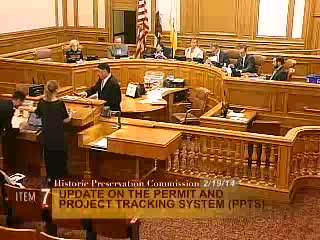
Planning staff preview unified permit-and-project tracking system, aim for public rollout this summer
Summary
Planning Department staff previewed a new Exela/Accela-based permit and project tracking system meant to unify legacy databases, expose GIS layers and allow online filing of some planning and historic-preservation applications; staff said a summer ‘go live’ is targeted but DBI data conversion remains the main unknown.
San Francisco planning staff on Feb. 19 previewed a new permit-and-project tracking system that will combine the planning department’s legacy case databases with the building department’s permit tracking and present a public portal for searches and limited online filing.
Kelly Ander, senior planner and business lead for the project, told the Historic Preservation Commission the system—built on Exela/Accela software with implementation partners Exela Automation and 21 Tech—will make more than 100 GIS layers available, allow members of the public to search both permits and planning applications in one place and enable online submission of certain planning applications, including historic-preservation permit-to-alter requests and certificates of appropriateness. "We'll have a public web page...and if a member of the public knows exactly which permit or planning application they want to see, they would go straight to the public web page," Ander said.
Ander and staff emphasized transparency improvements: the system will display a project’s detailed workflow steps and attached documents, give staff a true record of performance, and support new reports to break down backlog delays into specific steps. "We will be able to break the backlog into pieces," Ander said, describing the ability to see when a case reached a manager, when a planner started work, and other interim steps.
Staff cautioned that the largest remaining unknown is data conversion for the building department (DBI), which has four to six times the volume of planning records. Ander said testing and training will continue this spring, with the current schedule showing a target go-live "sometime this summer." The team also noted that full electronic document review (EDR) is not part of the initial Phase 1 scope for planning, though the software supports it and DBI may expand into EDR later.
Public commenters welcomed the system but urged that it track cross-department milestones that affect legal deadlines. Cathy Howard, speaking for members engaged in CEQA appeals, said the public needs to know when "first approval" occurs across departments so people can file appeals in time. Nancy Werfel and others raised concerns about "serial permitting"—projects that expand scope through multiple permit filings—and asked that the new system help the city detect linked applications.
The department said the system will be broadly available for general searches without login; transactions such as filing or payments will require an account. Staff also described plans for outreach and training for commissioners and the public ahead of deployment.
Next steps include continued testing and data-conversion runs over the next several weeks, additional public outreach and training this spring, and a planned public launch later in the summer if data migration proceeds on schedule.