Get Full Government Meeting Transcripts, Videos, & Alerts Forever!
Get email alerts on the Cultural Preservation topic
No spam. Unsubscribe anytime.
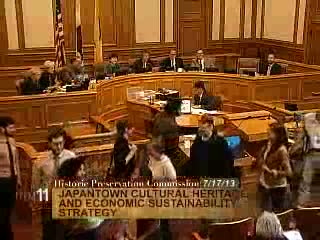
Planning Department and community unveil Japantown Cultural Heritage and Economic Sustainability Strategy
Summary
Planners and community representatives presented a collaborative strategy to preserve Japantown's cultural assets and economic vitality. The JHS inventories 318 cultural resources, identifies 23 areas of concern and proposes 19 recommendations including a community development corporation, community land trust, streetscape improvements and a strategic plan for the Japan Center malls.
Planning Department staff presented the Japantown Cultural Heritage and Economic Sustainability Strategy (JHS), an informational document developed with the Japan Town Task Force and community stakeholders to preserve cultural assets and support economic sustainability.
Steve Wertheim summarized the work: the team identified 318 individual cultural resources and 23 areas of concern ranging from the neighborhood’s declining percentage of residents of Japanese heritage (about 5 percent) to aging buildings, limited space for cultural events and the future of the Japan Center malls and parking garage. "Japantown will thrive as a culturally rich, authentic, and economically vibrant neighborhood," Wertheim said, repeating the plan’s vision and outlining 19 recommendations that include forming a community development corporation (CDC), exploring a community land trust, implementing Invest in Neighborhoods coordination, developing Japantown‑specific design guidelines, and improving Peace Plaza and Buchanan Mall.
Community representatives stressed the plan’s importance and urged specific next steps. Bob Hamaguchi of the Japan Town Task Force detailed outreach efforts and thanked city staff; long‑time residents and property owners urged a clear implementation resolution, more detailed maps and follow‑through on landmarking and economic tools that translate cultural recognition into durable protections (for example, land trust ownership or targeted leasing strategies).
Commissioners praised the comprehensiveness of the inventory and urged the community and staff to clarify the form of a future commission resolution so it includes explicit implementation steps (landmark studies, budgets, and staff work‑program direction).
What happens next: staff expects to return in September seeking endorsement and proposed implementation actions; community and city departments will continue to refine tools and potential legislative or administrative steps required to implement the strategy.