Get Full Government Meeting Transcripts, Videos, & Alerts Forever!
Get email alerts on the Historic Preservation Eir topic
No spam. Unsubscribe anytime.
Planning staff says Pine Street redevelopment would ‘substantially’ harm auto‑row historic district; EIR finds significant, unavoidable impacts
Summary
Planning Department staff told the Historic Preservation Commission the draft EIR for the Pine Street Auto Shops project concludes demolition and two 13‑story towers would cause a substantial adverse change to the Pine Street Auto Shops historic district and that mitigation would not fully avoid significant impacts.
The Planning Department presented its draft environmental impact report for the proposed redevelopment of six parcels on the north side of Pine Street between Van Ness and Franklin, telling the Historic Preservation Commission the proposal to demolish most existing auto‑related buildings and place two 13‑story residential towers on the site would "result in a substantial adverse change" to the Pine Street Auto Shops historic district.
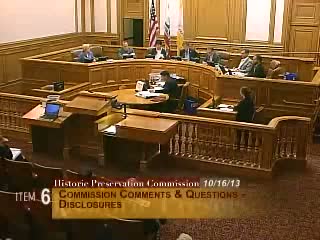
Lisa Gibson, the Planning Department staffer supervising the EIR, summarized the document at the commission27s Oct. 16 meeting and reminded commissioners the public comment period on the draft opened Oct. 3 and runs through Nov. 18, with a public hearing before the Planning Commission scheduled for Nov. 7. Gibson said the Department identified the project27s direct demolition and the effective removal of historic fabric as a significant and unavoidable impact to individual resources and to the district cumulatively.
The EIR analyzes three alternatives: the no‑project alternative; a partial preservation alternative that would preserve roughly 15%–22% of the existing building material but still leave a significant impact; and a so‑called full preservation alternative that would retain primary facades and incorporate them into a much smaller massing. "We found that the proposed project . . . would result in a substantial adverse change in the significance of the historic architectural resources," Gibson said, and that identified mitigation measures would not reduce the impact to a less‑than‑significant level for the proposed design.
Commissioners probed how staff and the project sponsor defined the partial and full alternatives. Shelley Caledroni, preservation staff, said the Department used the Article 10 de facto demolition threshold and CEQA feasibility principles to craft alternatives: an alternative must retain enough historic material to stay below the de facto demolition threshold used for analysis and also be feasible under the project goals. That threshold informed how much fabric an alternative could preserve while still allowing some development density.
Public comment was limited but focused. Mike Buehler of San Francisco Heritage said his organization is reviewing the EIR and flagged concerns that the proposed project "is not a meaningful preservation treatment" because it lacks adequate setbacks to let facades read against new construction. Buehler asked staff and the sponsor to explore shifting density onto adjacent vacant parcels to reduce impacts to the district.
What happens next: the Planning Commission will hold a public hearing on Nov. 7. Comments submitted orally at that hearing or in writing to the Planning Department27s environmental review officer by 5 p.m. on Nov. 18 will be included in the responses to comments that the Department prepares for the final EIR.
Speakers quoted or referenced in this article are listed in the commission minutes and were present at the Oct. 16 HPC meeting.