Get Full Government Meeting Transcripts, Videos, & Alerts Forever!
Get email alerts on the Housing Quality topic
No spam. Unsubscribe anytime.
HSH unveils plan to bring offline permanent-supportive housing units back online; offers $10,000-per-unit incentive
Summary
HSH reported an 8.4% vacancy rate in site-based permanent supportive housing (PSH) and said 368 units were offline. The department set a Dec. 16 deadline for providers to present plans, created a $700,000 repair pool with up to $10,000 per unit (up to $20,000 for larger units), and set March 31 deadlines for major-rehab units.
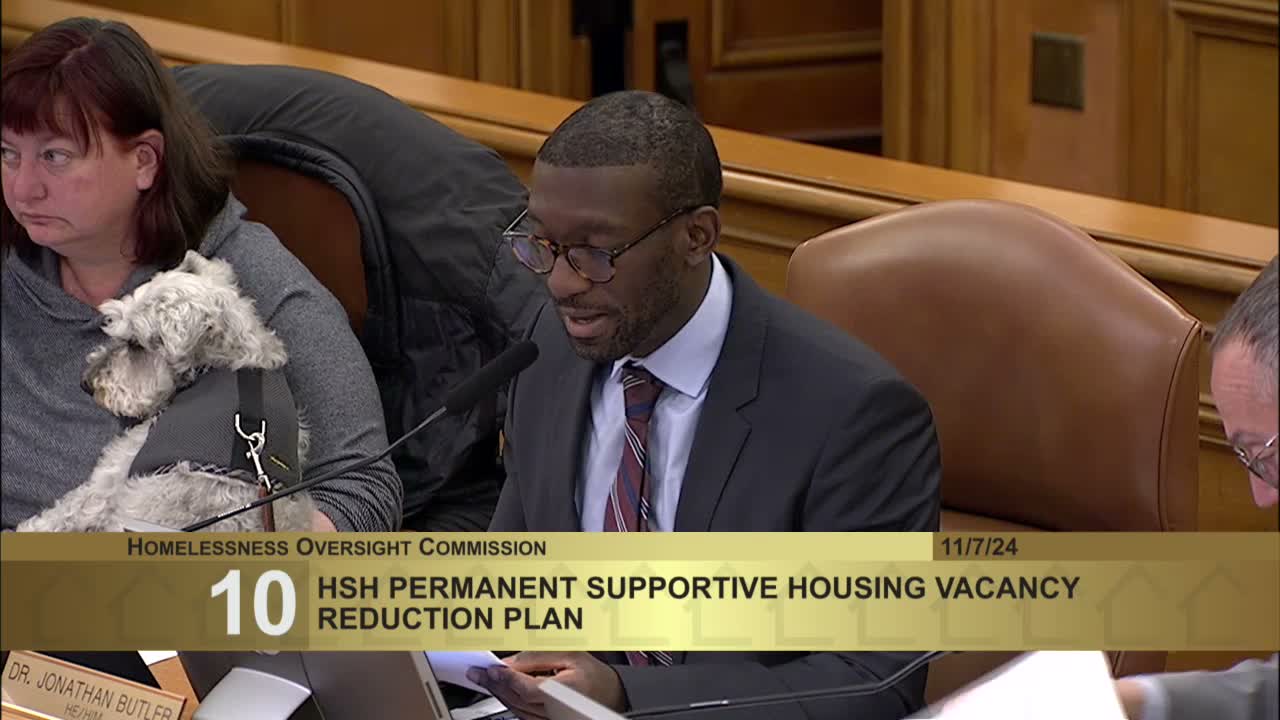
Salvador Minkibar, HSH director of housing, told the commission the department—s unit-level inventory shows 8,622 site-based permanent supportive housing units and a vacancy rate of 8.4 percent. He identified two buckets of vacancies: units that are 100% ready for occupancy and units that are "offline" because they need repairs, are on hold for transfers, or are otherwise unavailable.
"There were a total of 368 units that were offline when we put this report together," Salvador said, and HSH is prioritizing bringing those units back online. He explained that 53 percent of offline units need maintenance (with a subset requiring major rehab) and said roughly 110 units likely need significant repairs. Salvador described process changes including a shortened limit on transfer holds (30 days), unit-level inventory improvements and a new accountability trigger: any provider with 4% or more units offline will receive a site visit from a program manager.
As part of an "urgent rally" to reduce the backlog, HSH set aside $700,000 in capital-improvement funds and will permit providers to request up to $10,000 per unit on a first-come, first-served basis (the per-unit cap may rise to $20,000 for larger units). Salvador said providers must either return units to service or submit a detailed plan by Dec. 16 that estimates required work, costs and timelines; units that require major rehabilitation were given a March 31 deadline to come back online.
Providers and advocates who spoke at the meeting said limited maintenance staffing, increasing tenant acuity and vendor backlogs are major constraints. Tabitha, deputy director of Tenderloin Housing Clinic, said many buildings have only one maintenance worker and that turn-overs now involve clearing entire units, pest treatment and more intensive repairs than in the past. "We have a limited number of maintenance workers and janitors," she said, adding that capital funds do not always address day-to-day work orders and turn-over demands.
Why it matters: Offline PSH units reduce immediate housing capacity and lengthen homelessness spells. The Dec. 16 plan requirement and repair incentives are intended to create urgency, but providers warned that one-time funding will not solve structural staffing and long-term capital needs.
Next steps: HSH will collect provider plans by Dec. 16, disburse funds on a first-come-first-served basis, and conduct site visits for providers exceeding offline thresholds. Commissioners requested follow-up reporting on the outcome of plans and additional data about causes for vacant or offline units.