Get Full Government Meeting Transcripts, Videos, & Alerts Forever!
Get email alerts on the Homelessness Data And Policy topic
No spam. Unsubscribe anytime.
HSH director defends January PIT count, outlines outreach gains and HAP5 spending priorities
Summary
San Franciscos Department of Homelessness & Supportive Housing clarified its January point-in-time count methodology, reported increased outreach and housing placements, and outlined a proposed Homeless Housing Assistance and Prevention (HAP5) spending plan focused on shelter capacity and continuing operations at several navigation centers.
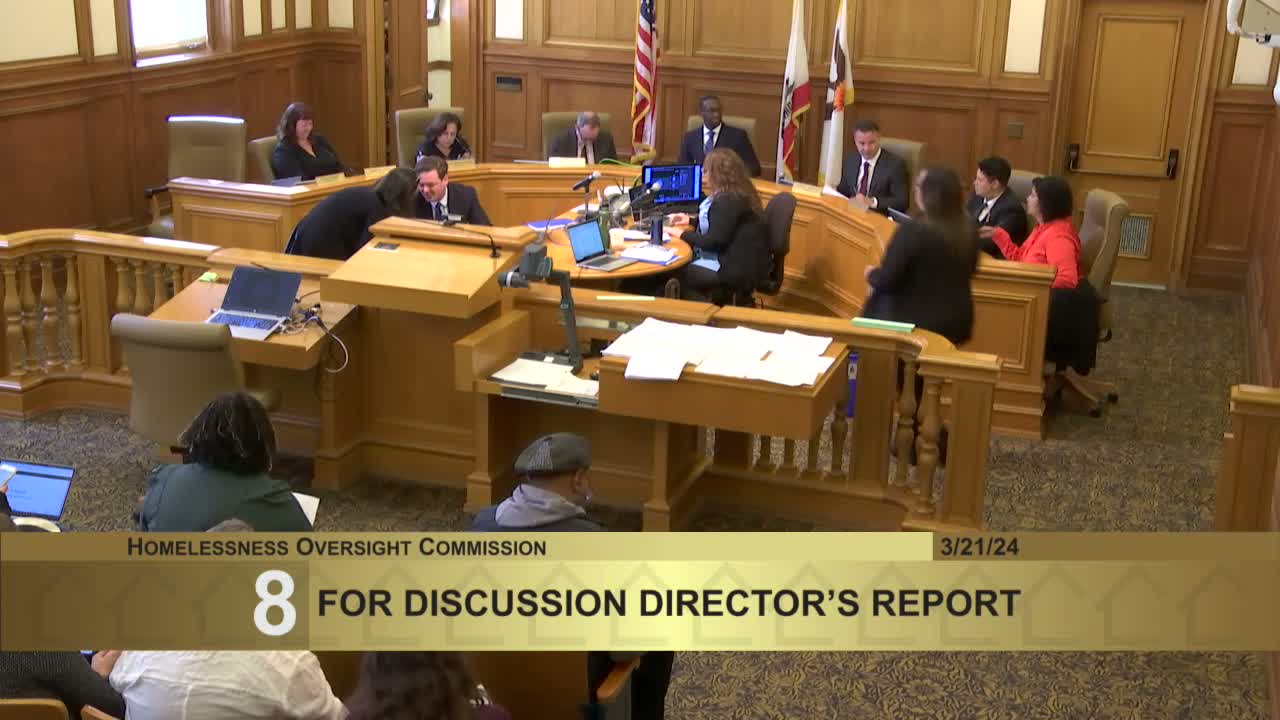
San Francisco Department of Homelessness and Supportive Housing Executive Director Shereen McSpadden told the Homeless Oversight Commission on March 21 that the department reviewed four Tenderloin routes in the January point-in-time (PIT) count and ultimately used the original visual-count methodology in line with U.S. Department of Housing and Urban Development guidance.
McSpadden said HSH revisited a small subset of routes to verify proper conduct and that concerns about movement and de-duplication led staff not to use second-night counts. "By utilizing the original visual count data, our methodology is in alignment with HUD guidance and point in time count best practices," she said.
McSpadden also reported steady outreach activity: 2,585 engagements in January and recent placements including a couple who had been unhoused for a decade who moved into the Baldwin Shelter. She said the department has issued 1,260 emergency housing vouchers in partnership with the Housing Authority, leading to 947 households housed, while noting some vouchers expire or are reissued when not used.
On encampment work, McSpadden said HSH and partners (Haluna Health among others) are using state encampment-resolution grants focused on Polk Alleyways and the Mission, and a Mission cabin project (1979 Mission) is scheduled to open in April with 60 cabins serving up to 68 people.
Chief of Finance and Administration Gigi Whitley presented details about the state-administered Homeless Housing Assistance and Prevention (HAP) program and the city's proposed HAP5 priorities. Whitley said prior HAP rounds funded emergency-shelter expansion, pandemic response needs and site operations; HAP5 would sustain operations for sites including 711 Post and the Baldwin Safe Navigation Center, support non-congregate shelter operations and fund a TAY drop-in center and HMIS/system improvements. She stressed that HAP is one-time funding with strict obligation deadlines and that HSH is coordinating closely with the State.
Commissioners asked for follow-up briefings on denial-of-service data and details on outreach to RV residents. McSpadden and staff said they will prepare a deeper dive on denials of service and continue coordination with the Department of Public Health on behavioral-health related denials.
The commission did not take separate votes on the directors report; multiple commissioners expressed support for the departments direction and requested additional data in coming months.