Get Full Government Meeting Transcripts, Videos, & Alerts Forever!
Get email alerts on the Strategic Plan topic
No spam. Unsubscribe anytime.
HSH unveils "Home by the Bay" strategic plan with ambitious housing and equity targets
Summary
HSH Director Shereen McSpadden presented "Home by the Bay," a July 2023–June 2028 strategic plan that aims to cut unsheltered homelessness by 50%, house 30,000 people over five years and advance racial equity; city officials warned the estimated $607 million in new funding is not yet secured.
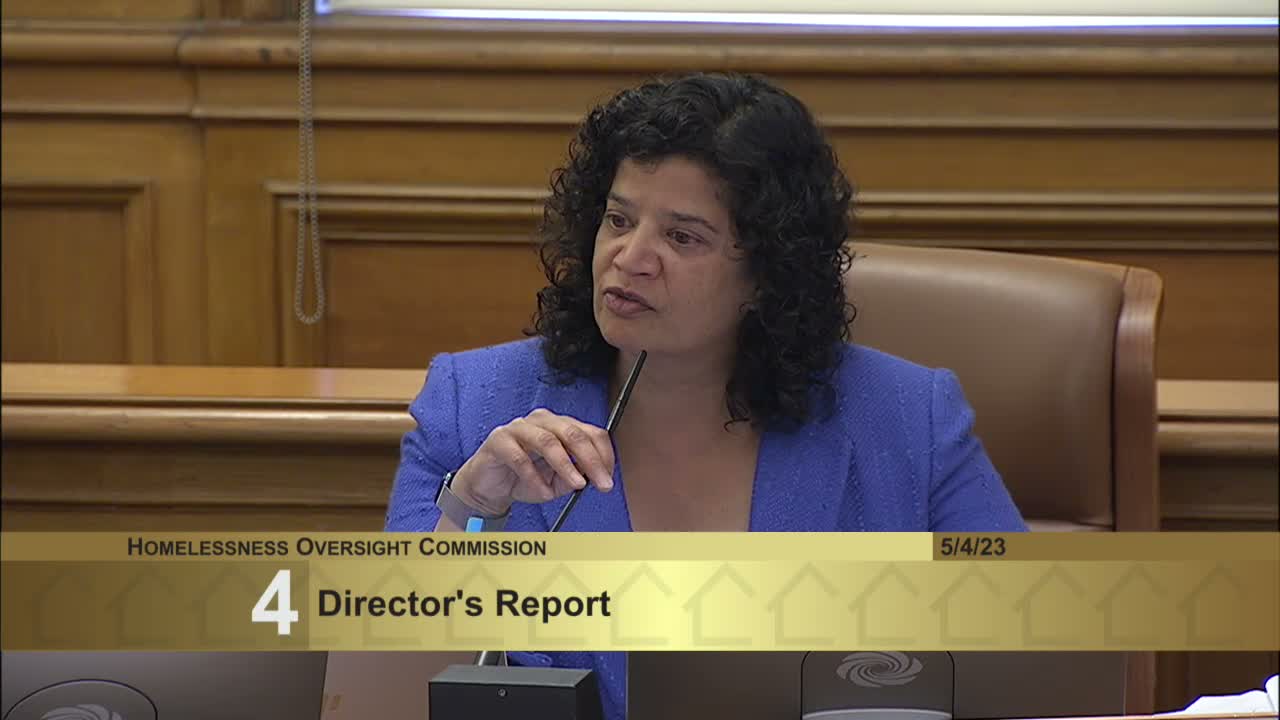
Shereen McSpadden, executive director of the city's Department of Homelessness and Supportive Housing, introduced the department's new five-year strategic plan, Home by the Bay, calling it an "equity driven plan to prevent and end homelessness in San Francisco." McSpadden told the Homelessness Oversight Commission the plan is intended to guide implementation from July 2023 through June 2028.
The plan sets specific targets and timeframes: reduce unsheltered homelessness by 50%, reduce the total number of people experiencing homelessness by 15%, and support at least 30,000 people to move into housing over five years. McSpadden said the plan also includes goals to ensure at least 85% of people who exit homelessness do not experience it again and to provide prevention services to at least 18,000 people at risk of losing housing.
McSpadden said the plan was developed with broad community input and with people with lived experience in the homelessness system. "Our plan is called Home by the Bay, an equity driven plan to prevent and end homelessness in San Francisco," she said. She emphasized the plan's focus on advancing racial equity, strengthening cross-department coordination and using system modeling to target investments.
The department's modeling projects substantial resource needs. McSpadden said the city estimates the expansion will require "approximately 607,000,000 in additional funding during the 5 year time frame of this plan and approximately $217,000,000 in additional funding annually thereafter," and she cautioned that those resources are "not yet secured." She urged commissioners to consider a mix of local ongoing commitments, aggressive state and federal advocacy, and philanthropic investment to achieve the targets.
Commissioners asked for more granular reporting on equity outcomes and disaggregated data, and McSpadden said the department will include equity metrics and regular public reporting as part of annual implementation plans. Public commenters and members of the provider community who spoke during public comment generally praised the plan's ambition but urged careful attention to counts of specific populations such as families and youth.
The commission did not take action on the strategic plan at the meeting; McSpadden said implementation plans and performance metrics will be presented to the commission starting in July.