Get Full Government Meeting Transcripts, Videos, & Alerts Forever!
Get email alerts on the Green Bank topic
No spam. Unsubscribe anytime.
LAFCO hears Green Bank options and EPA GGRF implications; commissioners press urgency and legal funding needs
Summary
LAFCO staff outlined how EPA's GGRF programs (NCIF, CCIA, Solar for All) might apply to a San Francisco Green Bank, noting eligibility windows, capitalization requirements and a likely one‑year operation requirement before origination. Commissioner concerns focused on delays caused by limited in‑house legal capacity and the need to secure outside counsel funding.
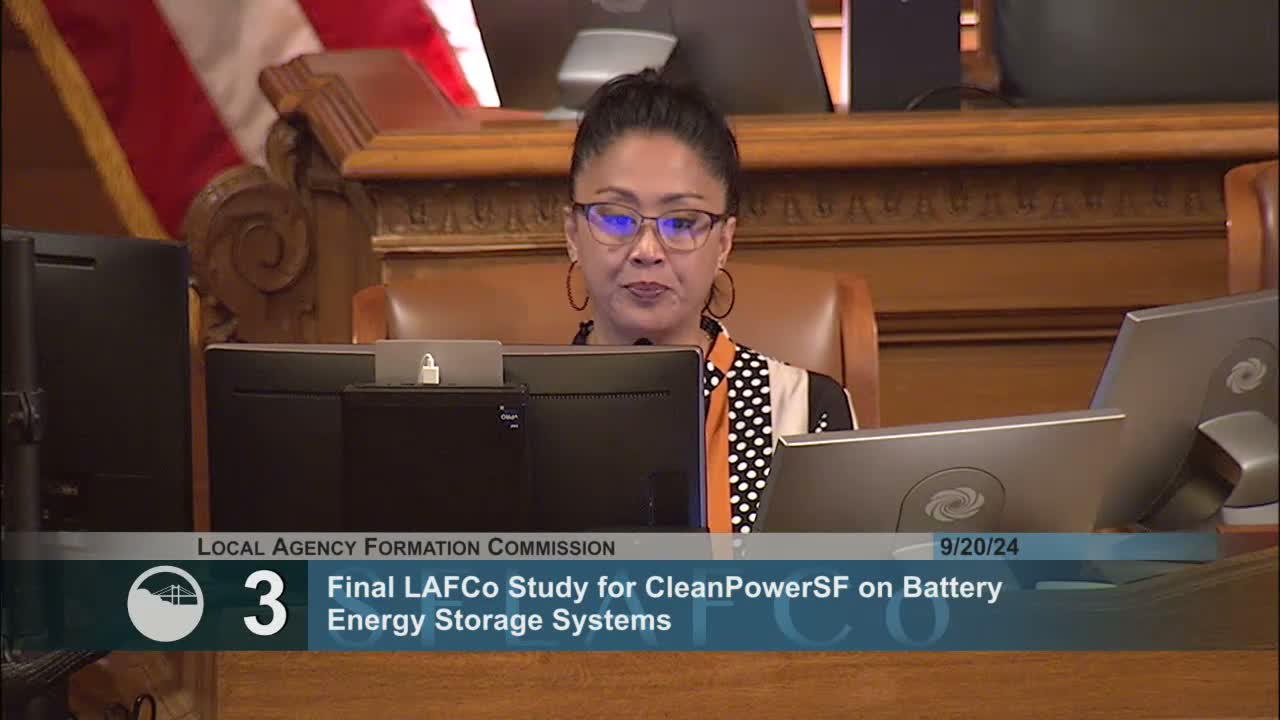
LAFCO on Sept. 20, 2024 received an update on a potential San Francisco Green Bank and the U.S. Environmental Protection Agency's Greenhouse Gas Reduction Fund (GGRF) competitions. Policy analyst Khalid Samari summarized the EPA program structure and how each competition could—or might not—apply to a nascent local green bank.
Samari told the commission the NCIF (National Clean Investment Fund) expects a green financing institution to be operational for at least one year before originating projects under that program. For the Clean Communities Investment Accelerator (CCIA), Samari said selected national coalitions will be required to provide capitalization ("up to $10,000,000") and technical assistance to lenders, and that CCIA funding is targeted to low‑income and disadvantaged communities.
Samari said LAFCO will prepare a Phase 1 memo (targeted for the January 2025 meeting) summarizing options and that a Phase 2 consultant will analyze how a San Francisco Green Bank could be financially viable while advancing the city's climate plan and benefiting SFPUC ratepayers. He also said LAFCO staff will refine the scope and issue an RFP for a consultant.
Commissioner Dean Preston expressed frustration at the timeline and urged urgency, saying the longer formation is delayed the more missed lending history will reduce initial funding opportunities. Preston specifically identified a bottleneck: the city attorney's office lacks in‑house expertise for drafting the necessary ordinance and the work requires outside counsel. "That cost is not millions...it's probably like a 100,000, maybe $200,000," he said, urging the commission and partners to identify funding sources for legal work so the formation can proceed.
During public comment, industry advocates again urged linking future financing to workforce and project‑labor agreements to ensure community benefits. LAFCO staff said they will continue to seek clarity from EPA on program design and applicability for San Francisco and report back as the negotiations conclude.