Get Full Government Meeting Transcripts, Videos, & Alerts Forever!
Get email alerts on the Clean Power Sf topic
No spam. Unsubscribe anytime.
SFPUC says Clean Power SF aims to begin enrollments July 2018; commission urged to watch pending state bills
Summary
The San Francisco Public Utilities Commission told LAFCO it is negotiating supply contracts and aims to begin large-scale enrollments for Clean Power SF on July 1, 2018; public commenters urged the commission to monitor and oppose proposed state regionalization legislation that could affect CCAs.
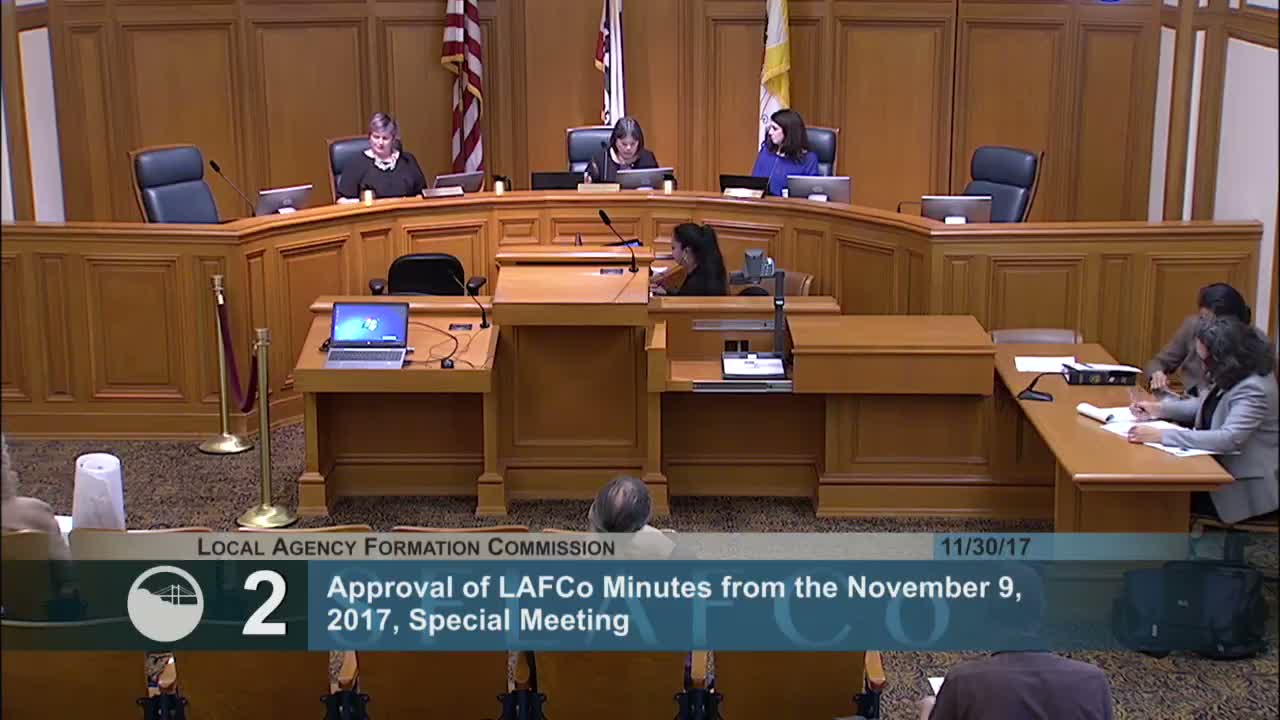
SAN FRANCISCO — The San Francisco Public Utilities Commission told the Local Agency Formation Commission on Nov. 30 that it is negotiating power-supply contracts and expects to begin major enrollments for Clean Power SF on July 1, 2018, with a second enrollment slated for July 2019.
"We went to our commission and got authorization for moving forward with those power contracts," said Barbara Hale, assistant general manager for power at the SFPUC, who described work to match procurement timing with market conditions so the program can serve a new group of customers by July 2018. Hale told the commission that staff will report back in the first quarter of 2018 with developments in pending California Public Utilities Commission proceedings that could affect program costs.
Why it matters: Clean Power SF is San Francisco's community choice aggregation program; its launch timing and contract terms determine when customers are switched from PG&E and how much above-market cost exposure may be allocated. The SFPUC is watching a CPUC case on the power charge indifference adjustment and has been active in proceedings tied to PG&E's proposed retirement of Diablo Canyon and planned replacement investments.
Public commenters flagged legislative risk. "That is an unacceptable result, and it's key that the LAFCO help oppose it," said Eric Brooks of the San Francisco Green Party, referring to proposed state measures to regionalize the grid and the potential for federal oversight under FERC that he said could undercut local control. Jed Holtzman of 350 Bay Area urged LAFCO staff to coordinate with the Board of Supervisors on any authorizations needed to enable contracting and faster procurement.
SFPUC staff noted the Diablo Canyon proceedings may carry implications for power charge costs; Hale cited a replacement-investment figure mentioned in filings of roughly $1,300,000,000 over six years that could affect community-choice customers if allocated by the CPUC. The SFPUC said it is advocating at the CPUC to limit such allocations to avoid saddling new CCA customers with those costs.
Next steps: The SFPUC said it will return to its commission and to LAFCO in early 2018 with CPUC outcomes and recommended procurement steps. LAFCO did not take formal action on the Clean Power SF update at the Nov. 30 meeting.