Get Full Government Meeting Transcripts, Videos, & Alerts Forever!
Get email alerts on the Clean Power SF topic
No spam. Unsubscribe anytime.
SFPUC says Clean Power SF rates remain cheaper than PG&E; CPUC net‑billing changes will affect new rooftop solar
Summary
SFPUC Director Michael Himes reported stable Clean Power SF enrollment, growth in 100% Super Green sales, drivers of recent high energy bills, and explained that the CPUC’s new Net Billing Tariff will replace net‑energy metering for new rooftop solar applications after April 15, 2023.
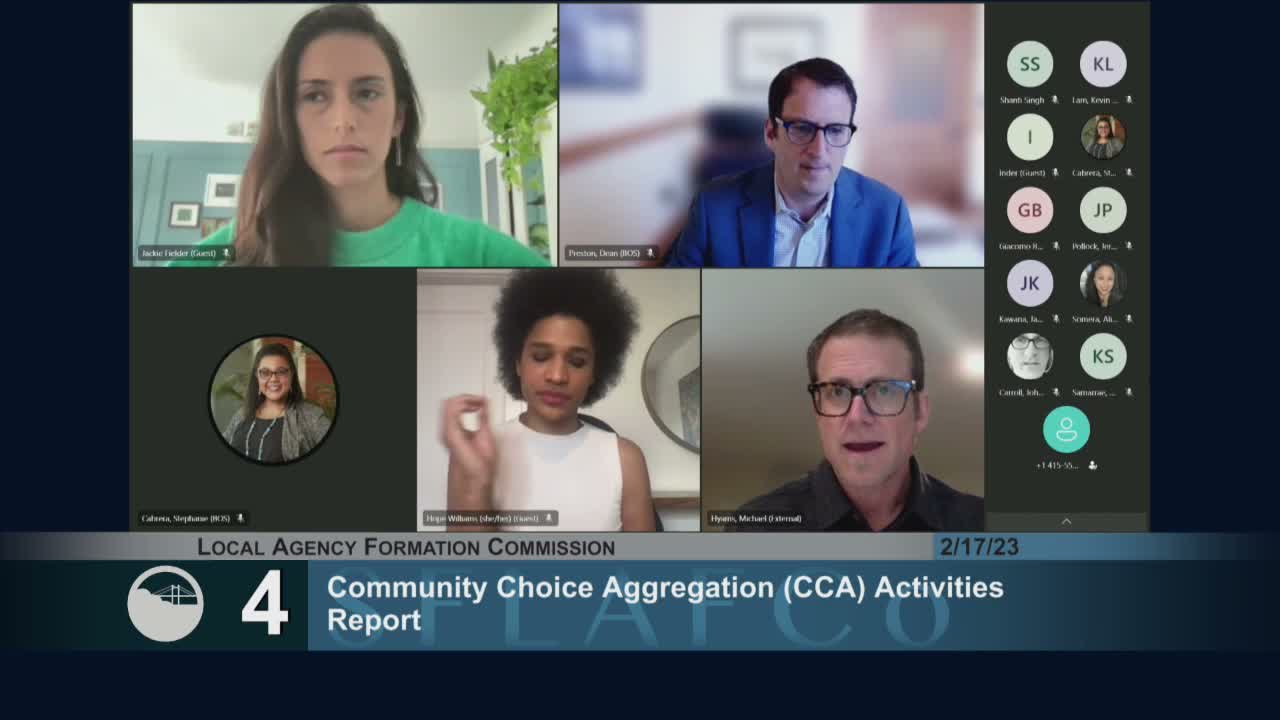
Director Michael Himes of the San Francisco Public Utilities Commission told LAFCO that Clean Power SF enrollment has remained stable while demand for its Super Green 100% renewable product, especially among commercial customers, is growing.
Himes explained recent drivers of high customer bills — winter heating demand, higher global natural‑gas prices affecting marginal electricity costs, and PG&E’s January increases to transmission and distribution rates — and said the program still offers total bill savings versus PG&E generation service. "Clean Power SF's green product is now at least 6% less expensive than PG&E's default generation service on a monthly bill basis," Himes said.
Himes also summarized a California Public Utilities Commission decision that adopts a Net Billing Tariff (NBT) to succeed net‑energy metering for new rooftop solar. Existing net‑metering customers will keep their agreements for 20 years from system interconnection; new applicants must submit interconnection applications to PG&E by 11:59 p.m. on April 14, 2023, to retain the current net‑metering rules. Applicants who file on April 15 or later would be enrolled under NBT and will be credited at a wholesale‑value rate rather than a full retail rate.
The SFPUC plans outreach on Super Green and is evaluating how NBT will affect its net‑metering customers. Himes said customers will see state bill credits (California climate credits) of about $90 appearing on March bills for eligible residential customers and that Clean Power SF is preparing further customer guidance as implementation details become available.
Questions from commissioners requested follow‑up data, including outage information attributed to PG&E and Clean Power SF staffing/budget and vacancies; Himes said he would coordinate with LAFCO staff to provide those details at a future meeting.