Get Full Government Meeting Transcripts, Videos, & Alerts Forever!
Get email alerts on the Delivery Cooperatives topic
No spam. Unsubscribe anytime.
LAFCO recommends city support a pilot delivery cooperative to offer workers an alternative to app platforms
Summary
A research presentation to LAFCO proposed that San Francisco cultivate worker‑owned delivery cooperatives, recommending a three‑phase pilot (member recruitment, training/administrative subsidies, and municipal facilitation) and suggesting city support for app development, permitting, and fiscal incubation to help a cooperative compete with dominant platforms.
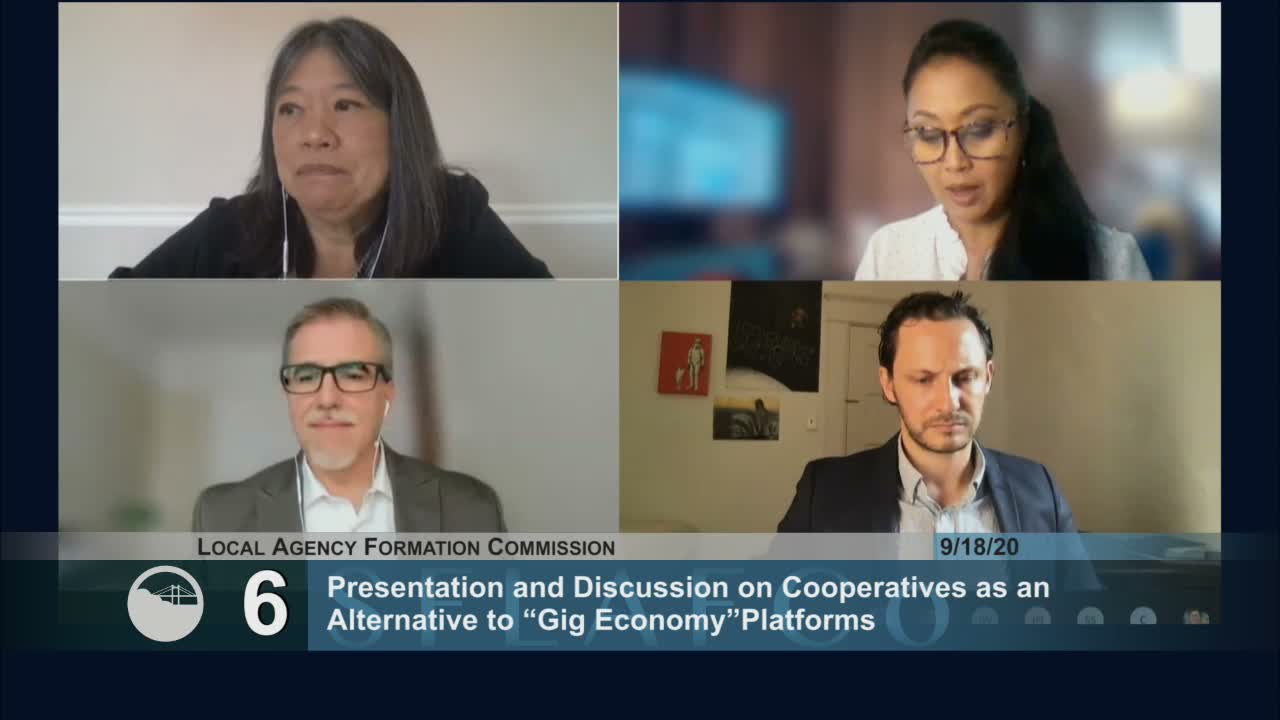
LAFCO Executive Officer Bridal Goebel introduced research by LAFCO associate Ryan Powell on cooperatives as an alternative to platform‑based delivery services.
Powell argued that cooperatives — including platform cooperatives and worker‑owned courier co‑ops — can provide a route to better pay, benefits and democratic control for gig workers. He recommended the city develop a pilot delivery cooperative in three phases: (1) identify worker stakeholders and organizers willing to form a cooperative; (2) subsidize workforce development and training and provide administrative supports such as payroll or cooperative consulting; and (3) leverage local government support for fiscal viability through permitting assistance, public land or relationships with local restaurants and businesses.
Powell cited existing examples (e.g., Bay Area courier co‑ops) and platform‑coop resources that can help with app development. Commissioners and public commenters expressed strong support and suggested the city consider fiscal sponsorship, app development resources (including open‑source or municipally hosted platforms), bulk procurement, and partnerships with restaurants to make a cooperative commercially viable.
Public commenters urged explicit planning to anticipate competitive responses from incumbent platforms and recommended the city house or sponsor open‑source technical infrastructure to ensure cooperatives can scale. LAFCO staff and commissioners said this work aligns with broader equity and labor policy goals, and staff indicated potential channels for early grants and partnerships, while noting further design work and funding identification will be required.