Get Full Government Meeting Transcripts, Videos, & Alerts Forever!
Get email alerts on the Clean Power Sf topic
No spam. Unsubscribe anytime.
SFPUC presents Clean Power SF local renewable report highlighting in‑city sites, cost tradeoffs and next steps
Summary
The San Francisco Public Utilities Commission presented a draft local renewable energy report identifying high‑value city and regional candidate sites, estimating in‑city additions of roughly 9–26 MW depending on suitability, and recommending further study, a capital plan and programs for disadvantaged communities, offshore wind and feed‑in tariffs.
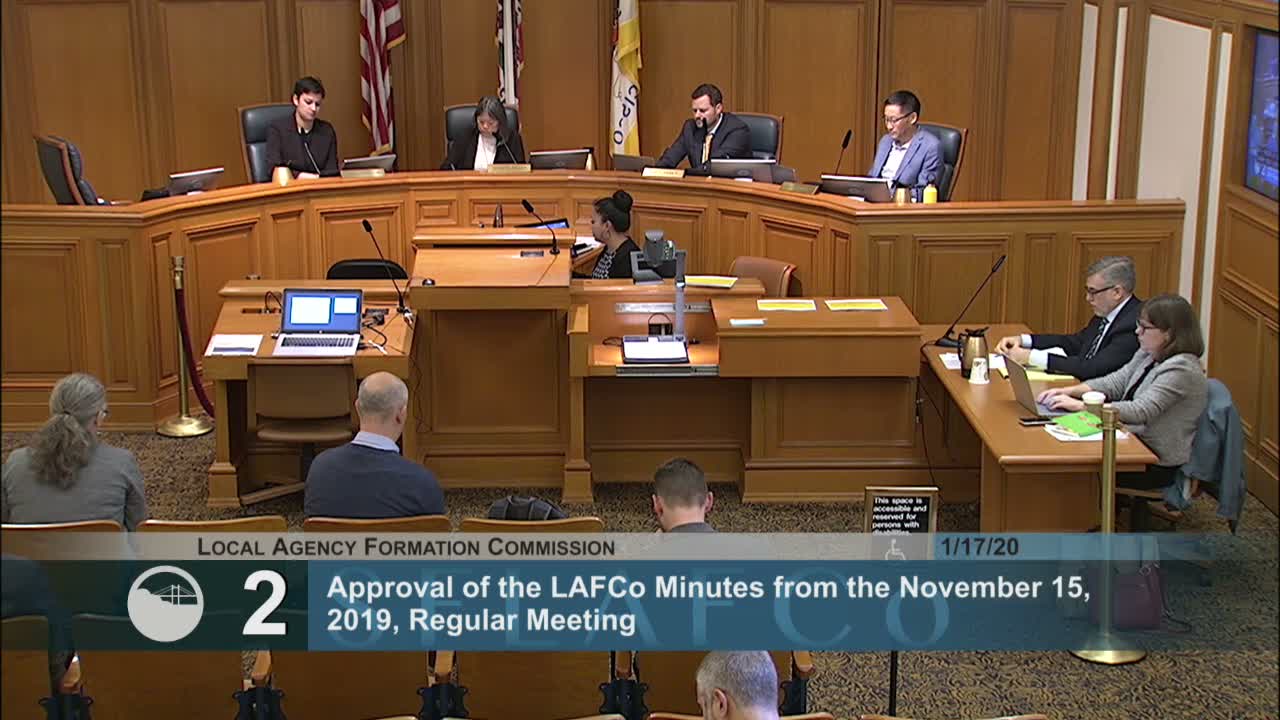
Barbara Hale, assistant general manager for power at the San Francisco Public Utilities Commission, presented the draft Clean Power SF local renewable energy report to the San Francisco Local Agency Formation Commission on Jan. 17, 2020. The report is intended to feed into the two‑year integrated resource plan the PUC must file under state law and to inform a rolling 10‑year capital plan for Clean Power SF.
Hale said staff screened roughly 132 in‑city sites and a smaller set of regional candidates to identify projects that could be developed and exported to the grid. "We identified 14 as medium to high suitability, representing about 9.3 megawatts for high suitability," Hale said, and noted medium‑suitability sites could represent about 16.6 megawatts more. She told commissioners the genome of tradeoffs: local projects are often costlier than regional projects but help the city meet local development goals and economic investment objectives.
The presentation included cost comparisons showing Clean Power SF's current average supply cost at roughly $55–$60 per megawatt‑hour; Hale said local projects at about $80/MWh would allow up to roughly 30% local content without raising average portfolio costs. Staff also identified about 20 megawatts of potential storage opportunities at city‑owned locations.
Hale outlined additional program options the report recommends exploring, including further evaluation of offshore wind partnerships, a disadvantaged‑communities solar program that could be funded by cap‑and‑trade revenues to deliver roughly 2 megawatts targeted to underserved neighborhoods, and a feed‑in tariff procurement to purchase privately developed generation (staff cited a potential 2–10 MW contribution by 2030 under that approach).
Public commenters praised the report's data but urged LAFCO and the Board of Supervisors to pursue a more comprehensive "build‑out" plan that integrates efficiency, demand response and privately owned sites. Eric Brooks of Californians for Energy Choice said the report "is an excellent report" but argued it "is not the renewable energy plan that we have been asking for for 15 years." Jed Holtzman of 350 Bay Area emphasized resiliency and the need to consider private sites and larger build requirements.
Commissioners pressed staff on site classification and barriers. Hale said some sites are rated medium because of known near‑term structural or contractual barriers (for example, reservoir structural upgrades) that must be resolved before a city project is feasible. She also warned that interconnection to the PG&E‑owned distribution grid has posed challenges at existing sites and will need early attention in project sequencing.
Chair Sandra Lee Feuer moved to continue consideration of the item "to the call of the chair" so commissioners and stakeholders could review the report in full; the motion was seconded and taken without objection. Hale said the PUC expects to fold the local findings into the integrated resource plan and to pursue capital planning steps in the coming fiscal year.