Get Full Government Meeting Transcripts, Videos, & Alerts Forever!
Get email alerts on the Labor Gig Economy topic
No spam. Unsubscribe anytime.
LAFCO unveils draft scope for gig-economy labor study, seeks $55,000 to start
Summary
LAFCO staff presented a draft scope for an "emerging mobility services" labor study to survey independent contractors working for TNCs and courier platforms. The study would start with a $55,000 request and include a representative worker survey, advisory committee input and an RFP process.
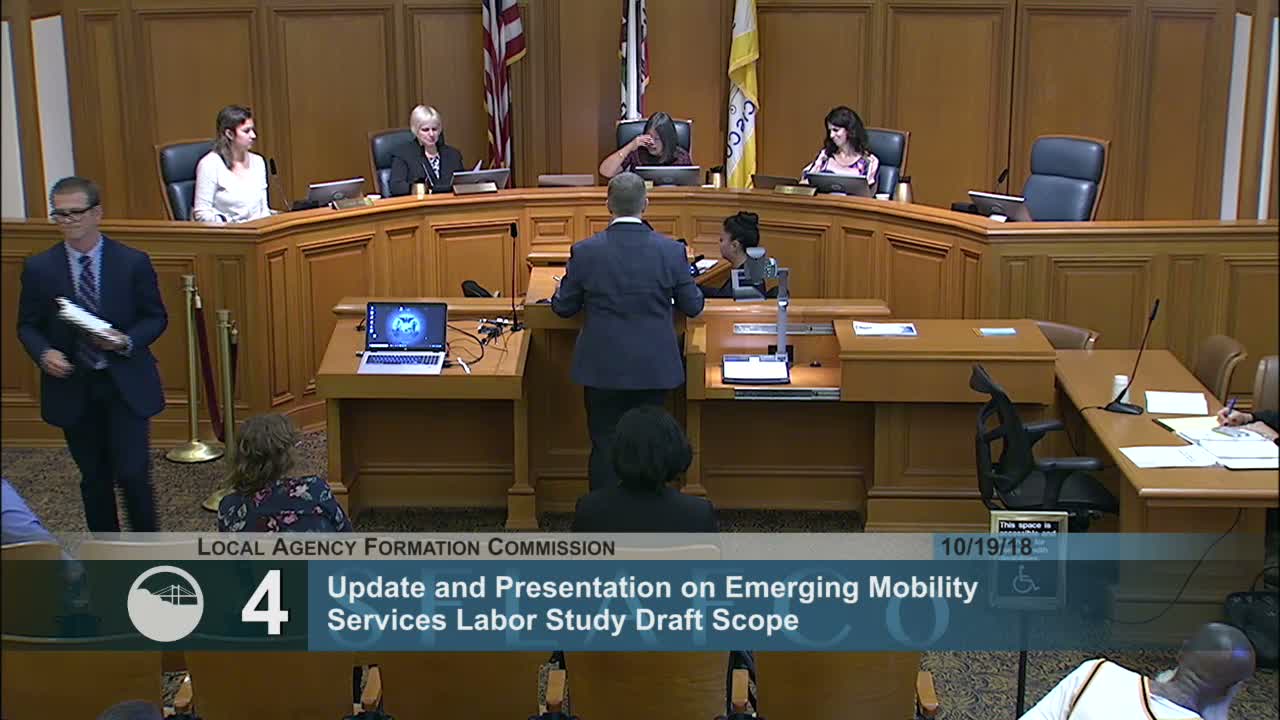
At its Oct. 19, 2018 meeting the San Francisco LAFCO commission received a draft scope for an "emerging mobility services" labor study aimed at measuring whether gig-economy companies' labor models align with the city's labor principles.
Ryan Gobel, executive officer, said the study will request company data, hire a consultant to conduct a representative, peer-reviewed survey of independent contractors (drivers and couriers), and use an equity framework to analyze earnings, benefits, deactivation and appeals processes, and other labor practices. Gobel said the initial phase would require about $55,000 in new expenditures and that he expected the total budget to increase after proposals are received.
Gobel explained the study would run in phases: develop methodology, conduct the survey and interviews, then draft a final report with policy recommendations for local, state and federal regulators as well as companies. He said the RFP process will be informal with at least three bids, and he expected the project team to solicit input from academics and community groups; he named potential advisory participants including Ted Egan (city chief economist), the Greenlining Institute, Transform, the Teamsters, and a Postmates representative.
Commissioners welcomed the proposal and suggested additional outreach and data sources, including contacting the National Employment Law Project and looking at New York City precedent. Commissioner Shanti Singh recommended analyzing the role of tips and platform bonuses in worker pay; Gobel said he would add that to the scope.
Public comment on this item included a speaker who urged hearings on contractor screening and raised safety concerns unrelated to the study's core scope; the commission indicated it would pursue further community engagement and public hearings as part of the study process.
Next steps: staff will finalize the RFP, seek bids, and return with recommendations and public engagement opportunities. The study's schedule described in the packet foresees RFP completion by November, a multi-month survey and an expected final report next spring.