Get Full Government Meeting Transcripts, Videos, & Alerts Forever!
Get email alerts on the Clean Power Sf topic
No spam. Unsubscribe anytime.
SFPUC says Clean Power SF enrollment growing; commissioners press for local build‑out plan as PCIA fees rise
Summary
SFPUC assistant general manager Barbara Hale told LAFCO the Clean Power SF program now serves about 109,000 accounts with a 3.2% opt‑out rate and plans a major citywide enrollment in April 2019; commissioners asked for a written local build‑out plan and discussed options to blunt PG&E exit‑fee impacts.
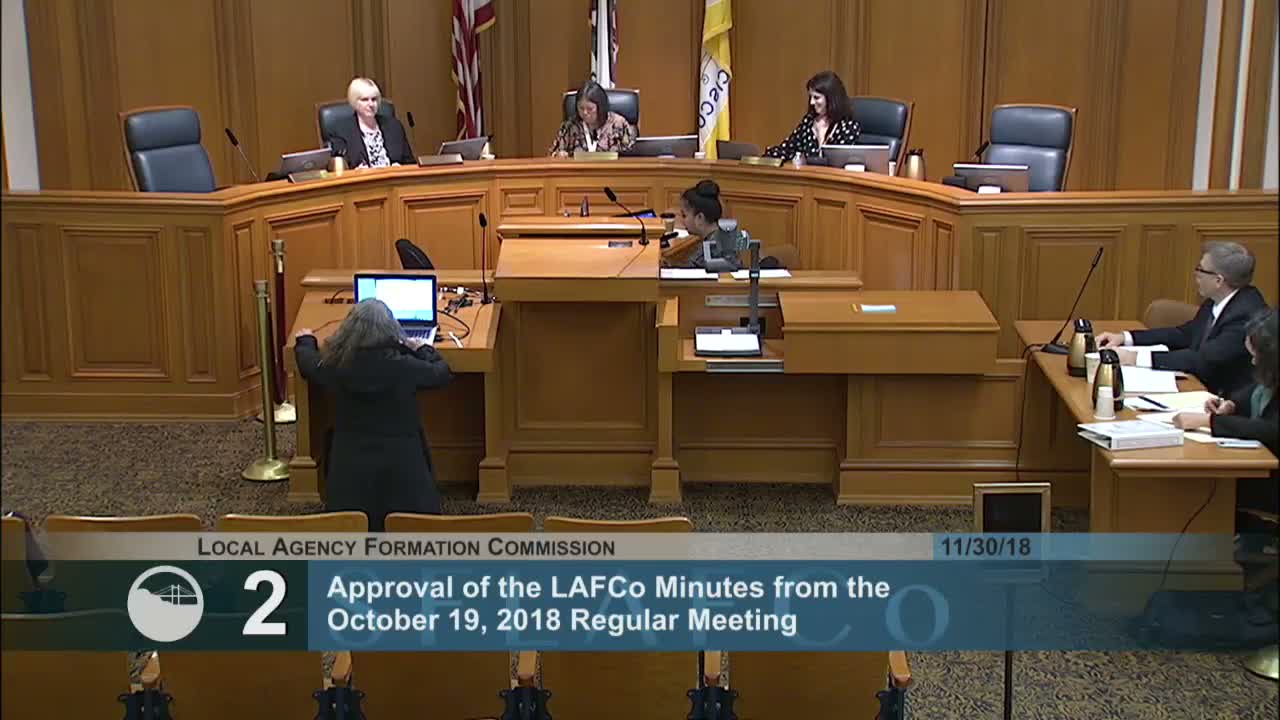
Barbara Hale, assistant general manager of the San Francisco Public Utilities Commission, told the San Francisco Local Agency Formation Commission on Nov. 30 that Clean Power SF has enrolled roughly 109,000 accounts and that the program’s cumulative opt‑out rate is about 3.2 percent. She said about 3.6 percent of customers have paid to upgrade to the program’s 100 percent renewable "super green" product.
Hale said the PUC is planning a phased citywide enrollment in April 2019 that would add about 280,000 mainly residential accounts, increasing load by an estimated 115 megawatts. "Once we've completed that we're expecting then to serve 365,000 accounts," she said. Hale added that recent and proposed changes to the investor‑owned utility exit fee known as the PCIA could reduce Clean Power SF’s program revenues; staff are proposing a targeted rate action, described as an "PCIA impact credit," and expect to present a rates action to the PUC in December to limit bill impacts.
The presentation drew sustained questioning from LAFCO commissioners about the program’s capacity to support local renewable generation. Commissioner Pollack said the $20 million annual revenue hit from recent PCIA increases, as presented, would "take away" city options for creative local build‑out and asked what projects the PUC is prioritizing. Hale said the PUC has identified potential projects (including sites noted in the 2015 InterNEX study such as Sunol and the Tesla portal sites) but has not yet issued an RFI or presented a decisive capital plan for Clean Power SF to the commission. She said some investments may be pursued via public‑private partnerships or by partnering with customers who would build generation and storage that contribute to the portfolio.
On legal and regulatory options, Hale said San Francisco and the statewide Community Choice Association (CalCCA) have filed rehearing requests at the California Public Utilities Commission challenging aspects of the PCIA methodology, and the PUC staff is coordinating with the city attorney on potential next steps. "We're working with our local electeds," she said, and noted that legislative solutions are also being discussed.
Public commenters echoed the commissioners’ urgency for a local plan. Eric Brooks of Californians for Energy Choice and San Francisco Clean Energy Advocates urged LAFCO to study the Sydney plan as a model and emphasized that local generation and storage can reduce transmission dependence and the fire risk associated with transmission lines.
The commission asked SFPUC staff to return with clearer, written material on local build‑out options and a proposed work plan. Hale said staff will prepare additional information and an integrated resource plan briefing after enrollment is complete, noting that completing enrollment will provide a more stable balance sheet to support near‑term investment decisions.
The discussion did not produce a formal vote on program policy; commissioners agreed to pursue a joint LAFCO‑PUC meeting and to request a staff presentation on local build‑out and capital planning.