Get Full Government Meeting Transcripts, Videos, & Alerts Forever!
Get email alerts on the Clean Power Sf topic
No spam. Unsubscribe anytime.
SFPUC says Clean Power SF on track; RFO for power supplies targeted for early August
Summary
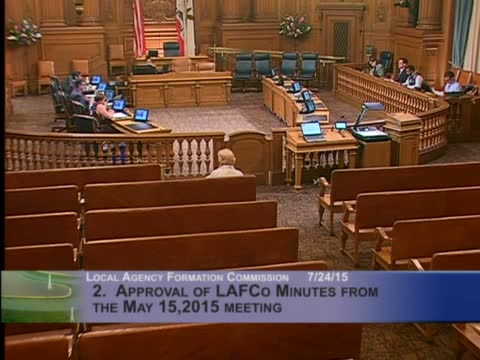
San Francisco Public Utilities Commission staff told LAFCO on July 24 that Clean Power SF has submitted an updated implementation plan to the CPUC, will recommend Noble Americas for back-office services, and is targeting an early-August request for offers for power supplies to support an initial phase of the CCA.
San Francisco Public Utilities Commission staff reported July 24 that the city’s Clean Power SF community choice aggregation program is moving into procurement and outreach phases as it prepares to serve city electricity customers.
Michael Himes of the SFPUC said the commission adopted an update to its CCA implementation plan on July 14 and submitted that update to the California Public Utilities Commission. He told the Local Agency Formation Commission the SFPUC will bring an award recommendation on Aug. 11 for back-office and customer-care services and is recommending Noble Americas as the top scorer in its recent RFP.
Himes said the next major procurement step is a request for offers for power supplies targeted for early August (he cited August 3 as the target release). The RFO will solicit energy supplies sufficient to meet at least a 30-megawatt demand slice, with the SFPUC proposing a default product that is 33–50 percent renewable and a premium product that is 100 percent renewable. All renewable energy for those products will be sourced from 'bucket 1' resources—energy delivered into California’s balancing authorities and principally located in-state.
Himes also explained resource adequacy requirements: load-serving entities must contract capacity reserves (typically 15 percent above peak forecasted load) to ensure reliability. Some capacity may come from renewable contracts or the Hetch Hetchy system; other capacity may come from in-state natural-gas or hydro facilities as required for reliability on the grid.
Asked about market availability, Himes described a competitive market for renewables: he said recent RFOs have drawn many more bids than the volumes requested, creating a buyers’ market and favorable pricing. He cited other procurement examples—Marin Clean Energy's contracts with Cottonwood solar (24 MW) and Recurrent Energy projects—and said Clean Power SF’s upcoming RFO seeks roughly 150,000 MWh beginning in 2016 (Himes provided an illustrative conversion to about 85 MW of solar equivalent for context).
Himes emphasized outreach plans tied to the launch: community stakeholder meetings, Sunday Streets presentations, e-newsletters, webpage upgrades and volunteer outreach to educate residents about the program.
On regulatory fronts, Himes said the city protested PG&E’s green-tariff advice letter at the CPUC, flagging concerns that PG&E’s bill presentment collapses multiple charges into a single line that could obscure comparisons with the CCA, and that PG&E’s proposed switching rules could prevent customers from rejoining a green-tariff program during CCA enrollment windows. He also noted a CPUC decision implementing Assembly Bill 327 will compress residential tiers and raise minimum bills—changes with uncertain local effects.
The SFPUC will present the recommended back-office award at its Aug. 11 meeting and proceed with the RFO process; the commission indicated it will continue outreach and report back as contracts and regulatory developments evolve.