Get Full Government Meeting Transcripts, Videos, & Alerts Forever!
Get email alerts on the Community Choice Aggregation topic
No spam. Unsubscribe anytime.
SFPUC outlines Clean Power SF program design, not‑to‑exceed rates and procurement changes
Summary
SFPUC staff presented Clean Power SF’s program design and proposed not‑to‑exceed rates (default ~8.6¢/kWh after adjustments; premium ~10.7¢/kWh) and asked the board to authorize streamlined contracting and multi‑year contracts to enable timely procurement and local build-out.
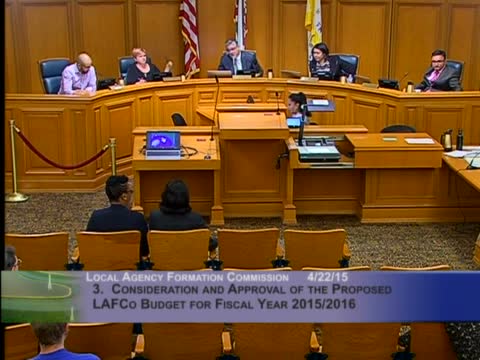
San Francisco Public Utilities Commission (SFPUC) staff presented an updated Community Choice Aggregation plan, Clean Power SF, to the Local Agency Formation Commission on April 22, describing program objectives, procurement plans, proposed rate caps and revenue expectations ahead of a planned program launch.
Barbara Hale, assistant general manager for power, said the SFPUC is “leading with affordability and reliable service” and that the rate fairness board had approved the not‑to‑exceed rates earlier in the week. Hale gave preliminary estimates that the SFPUC is "estimating it today at approximately $0.097 a kilowatt hour," which staff translated to about 8.6¢/kWh for the default CCA product after adjustments and roughly 10.7¢/kWh for a premium (100% renewable) product as a not‑to‑exceed cap.
Program and procurement authority: Hale described a legislative proposal to permit the SFPUC to use standardized industry contracts (for example, Western Systems Power Pool and Edison Electric Institute forms) for longer terms, to delegate contracting authority for certain renewable purchases (staff discussed up to 25 years for renewables), and to waive some city contract procedural requirements to speed procurement. Staff said they would report annually on how delegated authority is exercised.
Scale, revenue and risk: SFPUC staff proposed an initial 30‑megawatt launch to limit risk and work through the opt‑out process, noting that gross revenues for a 30‑MW program could range roughly from $22M to $24M and that, depending on premium‑product uptake and market prices, net revenues available for local build or rate stabilization could run from about $200,000 up to about $1 million annually.
Public comment and outreach: Public commenters, including advocacy groups, urged LAFCO and SFPUC to move quickly, consider launching at a larger scale to secure favorable market prices, and coordinate an integrated local‑resource build plan with the Department of the Environment. Staff reported 98 sign‑ups on the program’s online portal at the time of the meeting and said RFPs for back‑office and customer‑care services would be issued as program milestones are met.
Next steps: Hale and SFPUC staff said they will present final rates after market solicitations and that, per statute, not‑to‑exceed rates will be subject to a Board of Supervisors 30‑day review period before becoming effective; staff also sought LAFCO direction to start drafting procurement RFPs and to expedite necessary legislation.