Get Full Government Meeting Transcripts, Videos, & Alerts Forever!
Get email alerts on the Community Choice Aggregation topic
No spam. Unsubscribe anytime.
SFPUC updates LAFCO on Clean Power SF progress, supplier talks and pilot studies
Summary
SFPUC staff told LAFCO the Clean Power SF CCA program has begun supplier talks with Shell Energy North America and Noble Americas, is planning a renewables-focused RFP that will include city-owned site appendices and is reviewing a pole‑mounted solar pilot with PetroSolar; staff also filed CPUC comments on bonding and the PCIA and flagged SB 790 to clarify AB 117 implementation.
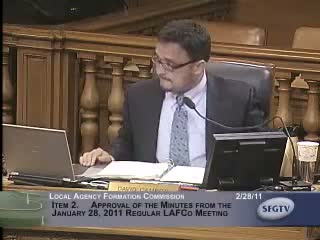
Mike Campbell, director of the Clean Power SF community choice aggregation (CCA) program at the San Francisco Public Utilities Commission (SFPUC), briefed the San Francisco Local Agency Formation Commission (LAFCO) on Feb. 28, 2011 about procurement, regulatory and technical steps to launch the city’s CCA.
Campbell said SFPUC staff have opened preliminary supplier discussions with Shell Energy North America — the supplier used by Marin’s CCA — and with Noble Americas for back‑office support. He described a parallel procurement track: a power‑supply contract to begin service and an RFP for new generation resources and local renewable build‑out that will be guided by city policy and will include a preference for in‑city renewables and combined heat‑and‑power projects.
“The RFP that we’re going to have for the development of resources will look to the existing city policy as its guide,” Campbell said, adding the agency will include a detailed appendix identifying city‑owned sites that could be ideal for renewables to give bidders more information.
On distributed solar, Campbell said SFPUC technical staff have met with PetroSolar engineers to review installation details for pole‑mounted PV, including communication protocols, wiring, and pole loading and wind‑load studies; the teams are evaluating the information to design a pilot deployment.
Campbell also summarized regulatory filings: SFPUC has submitted comments to the California Public Utilities Commission (CPUC) on bond amounts required of CCAs and on the cost‑responsibility surcharge or exit fee (often called the PCIA). He said utility parties in the CPUC proceedings have acknowledged structural bias in the current exit fee method and that staff expect that fee to decline, which would improve pricing for CCA customers.
Campbell highlighted state legislation his office helped draft: SB 790 (sponsored by Senator Leno), which he said aims to clarify questions left by AB 117 (the implementing statute for CCA), including a code of conduct and an expedited complaint process at the CPUC and protections around CCA termination and customer re‑entry periods.
LAFCO commissioners sought additional detail. Commissioner Hope Schmelzer asked about the PetroSolar meeting; Campbell said city engineers questioned protocols and physical installation details and the SFPUC is considering test units and monitoring strategies. Chair David Campos asked how local build‑out fits with procurement; Campbell and LAFCO staff said the RFP’s appendix will identify candidate city properties and that SFPUC expects to report back to LAFCO in June.
Public commenters from advocacy groups — including the Local Clean Energy Alliance, San Francisco Green Party and the Sierra Club — welcomed the collaboration but urged stronger, iterative coordination between the purchasing and build‑out tracks, recommended LAFCO oversight of the RFP, and asked that vetted CCA consultants be involved in reviewing the ERP and RFP design.
Next steps: SFPUC will continue supplier negotiations, advance the resources RFP with a clear local‑build appendix, and return to LAFCO with status updates; LAFCO staff said they will track pending state bills (including AB 920 and SB 790) and bring a position back to the commission when appropriate.