Get Full Government Meeting Transcripts, Videos, & Alerts Forever!
Get email alerts on the Implementation Status topic
No spam. Unsubscribe anytime.
SFPUC reports early solar-incentive demand; CCA implementation contracts await signatures
Summary
SFPUC reported more than 100 solar-incentive applications totaling roughly $444,000 so far and told LAFCO that two qualified contractors for CCA implementation have contracts awaiting signature, with PUC action expected by October.
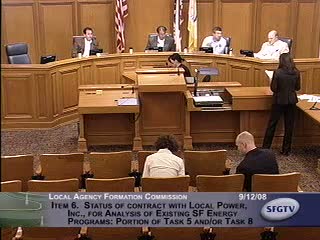
SFPUC staff updated LAFCO on two distinct implementation tracks for San Francisco’s energy initiatives: uptake of a new solar-incentive program and the status of consultant contracts for Community Choice Aggregation (CCA) procurement.
Laura Spangen of the SFPUC said the solar-incentive program launched July 1 and drew substantial public interest at three well-attended community meetings. "In July, we had 28 applications, totaling $143,000," Spangen said, and reported 73 applications in August; together the PUC had received 101 applications totaling about $444,000 to date, with the majority residential.
On procurement, Barbara Hale, assistant general manager for power at the SFPUC, said the RFQ (request for qualifications) process identified qualified contractors and that contracts had been prepared and were awaiting signature. Hale said the PUC hopes to present a work plan to its commission by October to lift current contracting constraints and enable the RFP (request for proposals) stage; she added that, if contractors sign quickly, a kickoff meeting is anticipated the following week.
Hale described two contractor teams with complementary strengths (one with engineering and technical feasibility experience; another with national best-practice experience) and said contract scopes were tailored to each team’s capabilities. She also noted that program-basis report detail influences schedule: a more extensive report could take a year to 18 months, while a lighter scope could shorten the timeline.
Commissioners asked for follow-up materials, including historical charts of solar installations and confirmation of how many applications—if any—are retroactive rebates; SFPUC staff agreed to provide that information at a future meeting.