Get Full Government Meeting Transcripts, Videos, & Alerts Forever!
Get email alerts on the Community Choice Aggregation topic
No spam. Unsubscribe anytime.
LAFCO to Decide April 4 on Hiring Consultant to Advance San Francisco—s Community Choice Aggregation
Summary
After months of slow progress, San Francisco—s Local Agency Formation Commission moved to accelerate Community Choice Aggregation (CCA) work and will hold a special meeting April 4 to consider hiring a consultant to perform tasks 2 and 3 (review of SFPUC RFI responses and recommendations on an RFP). Commissioners split on hiring now versus waiting for SFPUC alignment; staff will return with scoped pricing.
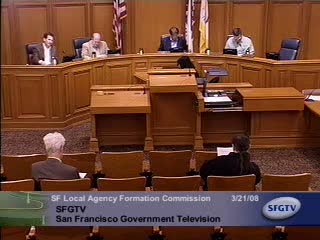
The Local Agency Formation Commission (LAFCO) voted to hold a special meeting on April 4 to consider hiring a consultant to advance San Francisco—s community choice aggregation (CCA) work, including review of responses to the SFPUC—s request for information and recommendations on a future request for proposals.
The decision follows a lengthy discussion in which LAFCO staff described the near-term tasks a consultant would perform (tasks 2 and 3 in the RFQ packet) and outlined the SFPUC—s timetable: proposals expected April 11, interviews around April 29, rankings posted May 2, SFPUC consideration on May 27 and an award targeted by June 24. Executive staff said they would bring a contract limited to tasks 2 and 3 with not-to-exceed pricing if the commission directed them to move forward.
Why it matters: advocates say the city needs a functioning consultant now to keep CCA implementation from slipping; commissioners said hiring would both produce useful analysis and send a signal to SFPUC leadership. Opponents expressed concern about duplicative work or conflicts if LAFCO—s consultant later sought SFPUC implementation contracts.
Ms. Miller, LAFCO staff, outlined the compromise the commission considered: hire a consultant now to perform discrete, time-limited tasks (review RFI/RFP materials and recommend changes to the implementation plan) and write contract terms that would exclude that consultant from later bidding on implementation where a conflict could arise. "I would bring a recommendation back to you, with the contract and a scope of work," Miller said, adding she expected pricing information within two weeks.
Barbara Hale, assistant general manager for power at the San Francisco Public Utilities Commission, told commissioners that the SFPUC could not waive legal or administrative requirements such as Local Business Enterprise (LBE) rules and that the SFPUC receives legal advice from the city attorney—s office (meaning the SFPUC cannot contract outside legal counsel). Hale emphasized coordination: the SFPUC is following its contracting calendar and expects to return a contracting recommendation to its commission in late May.
Public commenters pushed LAFCO to act quickly. Eric Brooks of Our City/Community Choice Energy Alliance said advocates were frustrated by delays and urged an immediate selection or a special meeting so LAFCO could "be the catalyst" on CCA.
What happens next: staff will gather price proposals and a recommended scope for tasks 2 and 3 and present a contract recommendation at the April 4 special meeting so commissioners can make a decision. If approved, the commission—s contract would be limited to the task-specific scope and include conflict protections.
Speakers quoted in this article are drawn from LAFCO meeting records and public comment. The commission did not record a roll-call vote count for this directive; the April 4 meeting will carry the formal recommendation and any motion to contract.