Get Full Government Meeting Transcripts, Videos, & Alerts Forever!
Get email alerts on the Mills Act Modifications topic
No spam. Unsubscribe anytime.
Commission debates proposed Mills Act changes aimed at targeting preservation incentives
Summary
Planning staff presented proposed Mills Act modifications to prioritize properties with demonstrated preservation need; commissioners raised concerns about procedural fairness and potential deterrents for applicants and offered revisions for staff to consider.
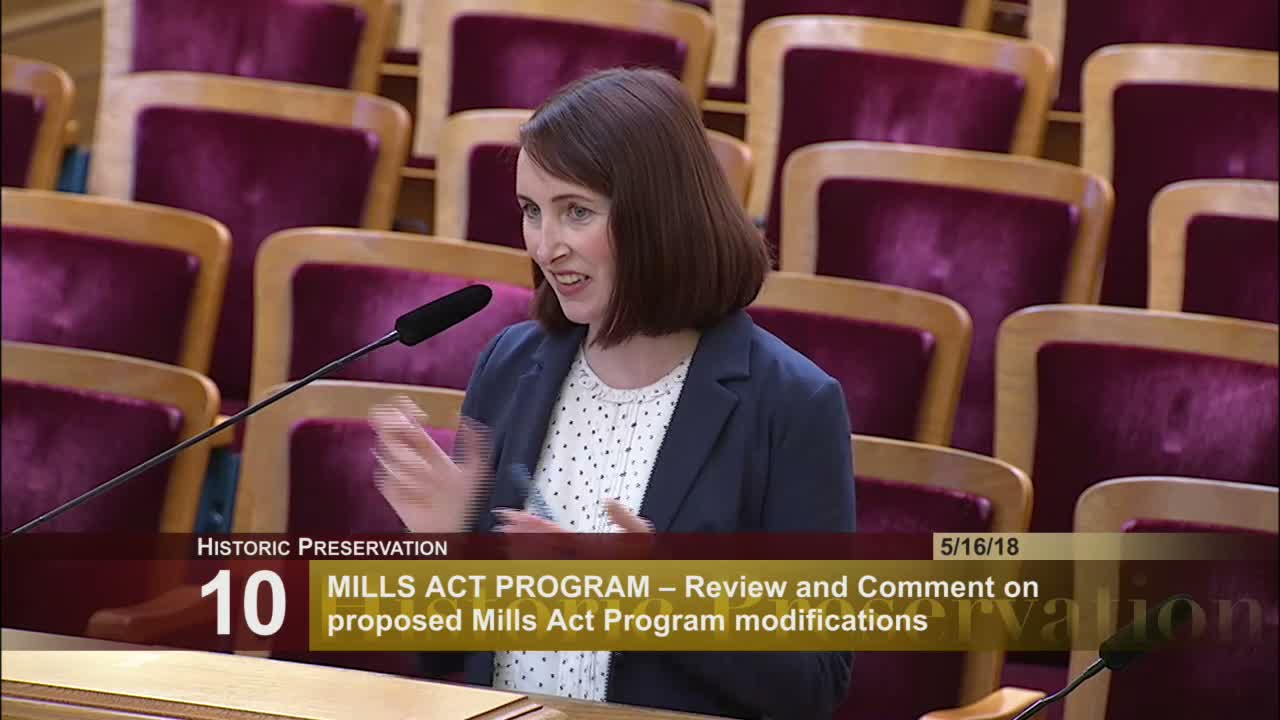
Planning Department staff presented proposed amendments to the Mills Act incentives program on May 16, proposing priority criteria and procedural changes intended to address recent concerns raised by the Board of Supervisors' Government Audit and Oversight Committee.
Staff outlined proposed priority criteria including necessity (demonstrated need for financial incentive), investment (substantial private investment expected), distinctiveness (exceptional historic value), legacy-business location, and recently designated landmarks. Staff also proposed disallowing applications from properties with outstanding enforcement violations and requiring that qualifying scopes not be completed before a contract is in effect.
Commissioners raised process and equity concerns. Several members warned that requiring certificate-of-appropriateness approvals or substantial pre-application work before a Mills Act contract is granted could create a catch'22 that deters applicants who need the tax incentive to finance work. Commissioner Hyland and others noted the program historically rewarded rehabilitation work (including examples where owners had already invested) and cautioned against overly burdensome new requirements that would reduce program uptake.
Staff proposed revisions based on commissioner feedback: allow work to begin within the Mills Act calendar year (to demonstrate good faith), make qualifying scope lists illustrative rather than exhaustive, and consider deleting a proposed restriction judged too onerous. Commissioners asked staff to improve outreach and coordination with small-business assistance programs and to return with refined language.
No formal motion or vote was taken; planning staff will revise the proposal and discuss them further with the City Attorney and GAO, and return to the commission before Board of Supervisors action.