Get Full Government Meeting Transcripts, Videos, & Alerts Forever!
Get email alerts on the Nightlife Legislation topic
No spam. Unsubscribe anytime.
Staff outlines new state laws, entertainment zone growth and Prop M implementation for nightlife businesses
Summary
The commission heard updates on newly signed state bills affecting nightlife — SB 969 (entertainment zones), AB1775 (cannabis cafe local-implementation), AB2359 (10 new type 87 neighborhood liquor licenses in 2025) — plus local implementation steps for Prop M license fee waivers beginning in 2026.
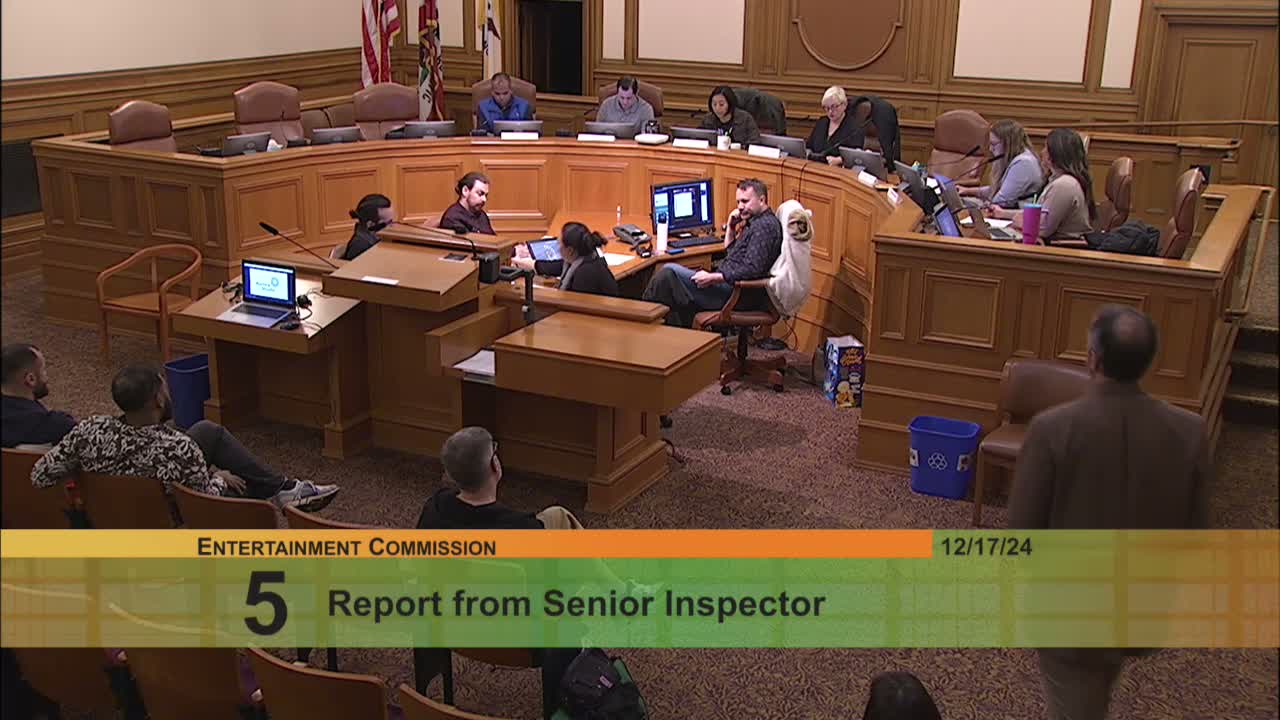
At the Dec. 17 meeting, Ben Van Houten of the Office of Economic and Workforce Development updated the commission on recent state and local legislative changes that will affect nightlife businesses in San Francisco.
Van Houten said SB 969, which San Francisco cosponsored, expands entertainment zones statewide and includes technical cleanup that will improve the program locally once it takes effect in January. He also briefed commissioners on AB1775, authored by Assembly Member Haney, which creates a pathway for cannabis consumption lounges and requires local implementation ordinances before the new use may operate locally.
On neighborhood alcohol licensing, Van Houten noted AB2359 expands the type 87 neighborhood liquor license program and will generate 10 new full-liquor restaurant licenses starting in 2025 — five for the Excelsior and five for the Bayview. He also summarized recently enacted drink‑spiking laws (including AB2375) that add drink lids and reporting obligations and AB2402, which incorporates drink‑spiking education into required responsible beverage service training.
Local rollout and support: Van Houten said the city launched three entertainment zones this year (Front Street, a Thrive City/Chase Center zone and a soft launch on Harlan Place/Mark Lane) and that staff will continue implementing downtown activation permitting tied to supervisor-led legislation. He highlighted recent city action to adopt Prop M follow-on legislation that eliminates many license fees starting in 2026.
Why it matters: The combined state and local changes aim to lower barriers for small nightlife businesses, create additional neighborhood liquor licenses, and impose new public-safety-related obligations on bars and restaurants. Some measures — notably cannabis cafes — still require local action before taking effect.
Van Houten advised businesses to track implementation timelines and prepare for new reporting and training obligations beginning in the coming months and years.