Get Full Government Meeting Transcripts, Videos, & Alerts Forever!
Get email alerts on the Schools Reopening topic
No spam. Unsubscribe anytime.
San Francisco health officials outline school‑reopening plan, stress testing and cohort limits
Summary
Department of Public Health officials told the Public Health Commission that county COVID indicators have improved enough to begin a phased approach to reopen schools: 53 schools submitted letters of interest for waivers; the department cites three local indicators and says cohorts of up to 14 students will guide K–12 reopening.
San Francisco Department of Public Health officials told the Public Health Commission on Sept. 1 that improving local COVID‑19 indicators allow a cautious, phased reopening of educational activities and some low‑risk personal services.
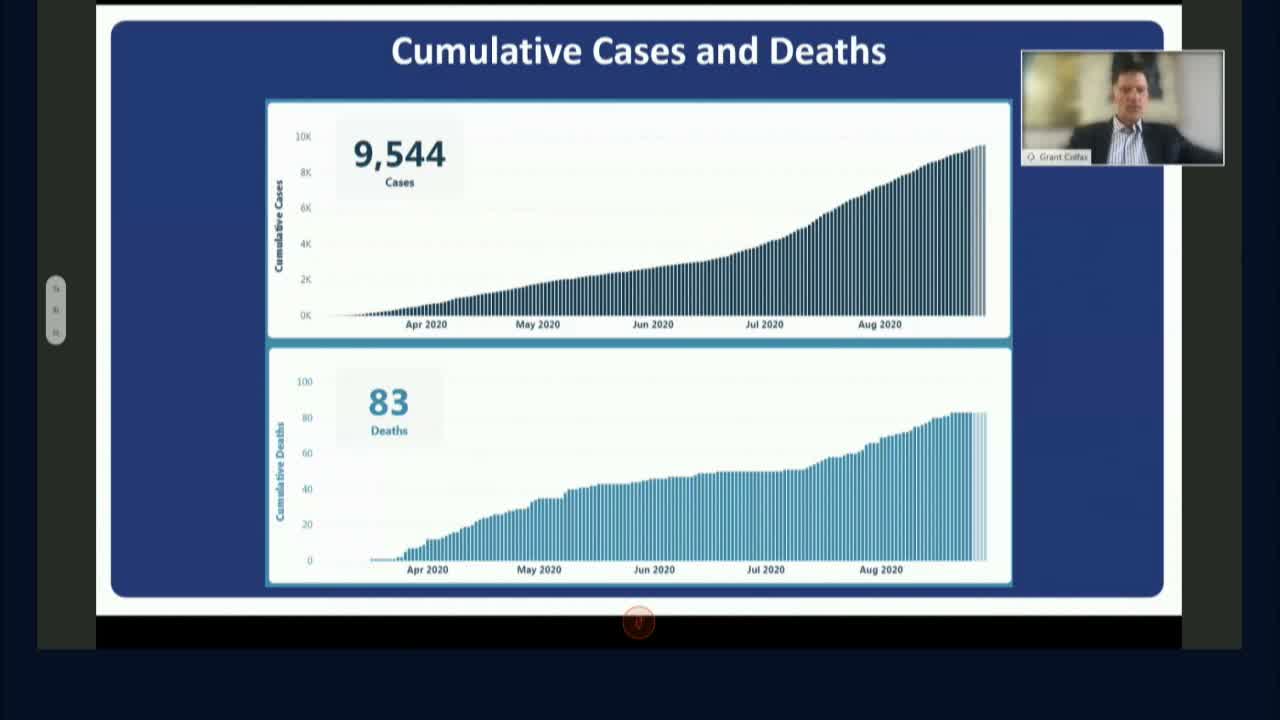
Director of Public Health Grant Colfax said the city has diagnosed “over 9,200 cases” and recorded 83 COVID‑19 deaths, and he emphasized continued testing and contact tracing. “Our 7‑day rolling average is 3,500 tests a day,” Colfax said, adding that the department reaches roughly 81 percent of new cases and 77 percent of contacts. He said hospitalizations have trended down to 72 patients, and that the department is maintaining a 30‑day PPE supply.
Dr. Thomas Aragon, the department’s lead on reopening strategy, described the state’s new two‑metric tier framework and said San Francisco’s extensive testing lowered its adjusted case rate and placed the county in the state’s red tier. “The idea is … as you move into the different tiers you can open up more,” Aragon said. He outlined a three‑part local approach: prioritize outdoor activities, focus urgently on opening schools safely, and expand lower‑risk indoor services later.
Anna Velizic, who leads the schools reopening team, summarized the department’s K–12 guidance and the waiver process. She said the department received letters of interest from 53 schools and has distributed the full waiver application to those that expressed intent. Velizic described the thresholds for in‑person return as three local indicators that must be met and sustained: case rates that are stable or declining, hospitalizations that are stable or declining, and a test‑positivity rate at or below 3 percent. She listed concrete mitigation measures schools must adopt, including small, stable cohorts, symptom screening, controlled movement within sites and communication templates for case responses.
School‑specific operational guidance emphasizes cohorting and minimizing cross‑household mixing. Aragon said cohort size guidance from the state standardizes cohorts at 14 students in many cases and noted that some youth sports and out‑of‑school programs may operate outdoors with stable cohorts and limited equipment sharing. Aragon cautioned that playgrounds and certain indoor activities remain restricted while community transmission is high.
Why it matters: San Francisco’s waiver process and the department’s guidance determine whether and how particular elementary, middle and high schools can safely resume in‑person instruction. Commissioners repeatedly pressed for clearer, centralized web guidance to make rules easier for families and operators to find; Aragon and Colfax said the department will improve website content and stakeholder communication.
What’s next: The department will continue to process waiver applications and monitor the three local indicators; Colfax and staff said they will return to the commission with further details and updates as conditions change.