Get Full Government Meeting Transcripts, Videos, & Alerts Forever!
Get email alerts on the Gwa Contract Review Waiver topic
No spam. Unsubscribe anytime.
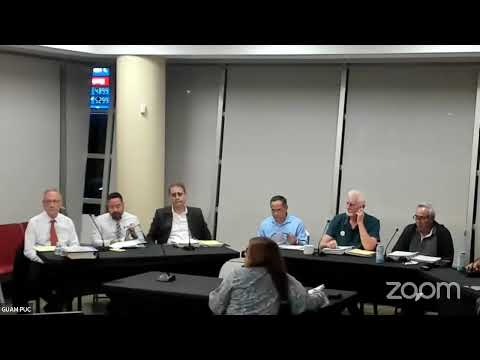
PUC hears ALJ and consultant backing for GWA waiver from contract-by-contract review, seeks regular reporting
Summary
An ALJ and Georgetown review recommended the PUC waive standard contract‑review for Guam Waterworks Authority (GWA) partial consent‑decree projects to avoid delays on roughly $330 million in required work, while ordering regular reporting so the commission can track costs, milestones and risks.
An administrative law judge recommended that the Guam Public Utilities Commission exempt the Guam Waterworks Authority’s consent‑decree projects from routine contract‑by‑contract review, but keep a strict reporting regime so the PUC can monitor cost, schedule and prudence.
Fred, the ALJ assigned to the docket, told commissioners GWA’s partial consent decree requires roughly $330,000,000 in projects over 10 years and “to have the PUC have to review each of the contracts would be too time consuming, would delay their projects under the consent decree.” He and a Georgetown Consulting Group review recommended an exemption from the contract review protocol while requiring regular reports that address compliance with regulations, deadlines and milestones, budget management, stakeholder communications, risk management and a program manager or designee.
Teresa Rojas, counsel for GWA, said the consent decree took effect Aug. 9 and triggered compliance timelines with U.S. EPA oversight. While she supported a waiver of the PUC’s contract review protocol, Rojas asked the commission to accept semiannual (January and July) written progress reports to EPA beginning in 2025 instead of the quarterly reporting schedule proposed by the ALJ and Georgetown. Rojas said the reports would include project costs, change orders, contractor names and contract amounts and that GWA will publish procurement notices in a centralized place on its website to improve stakeholder communication.
Commissioners pressed staff on whether the semiannual schedule would satisfy the ALJ’s six reporting elements; GWA representatives said their in‑house compliance and safety staff would oversee reporting and that website and social‑media notices required by the consent decree would address stakeholder communication. The ALJ acknowledged GWA’s in‑house capabilities but emphasized the PUC still needs timely, auditable disclosures so the commission can “exercise its due diligence to make sure that the costs are spent wisely.”
The ALJ also suggested flexibility on the program‑manager requirement, recommending GWA either hire a qualified program manager or designate a qualified internal employee to perform the role, and proposed report deadlines on or before Dec. 31, March 31, June 30 and Sept. 30 if quarterly reporting were imposed.
Next steps: commissioners discussed a motion to adopt the ALJ’s proposed order — which would waive the contract‑review protocol for the partial consent decree projects while imposing reporting obligations — and debated whether to accept GWA’s request for semiannual reports instead of quarterly ones. The transcript records a motion to approve docket 2501; commissioners continued to discuss final report cadence and oversight language. The ALJ’s proposed reporting requirements and GWA’s requested modifications will be reflected in the commission order or in follow‑up filings under the docket.