Get Full Government Meeting Transcripts, Videos, & Alerts Forever!
Get email alerts on the Noise Enforcement topic
No spam. Unsubscribe anytime.
Commission hears months of neighborhood noise complaints at Halcyon; action tabled pending operator's roadmap
Summary
The Entertainment Commission held a prolonged hearing on noise and after‑hours operations at Halcyon, heard technical reports and neighbor testimony, and voted to table formal sanctions while ordering the operator to submit a roadmap for additional soundproofing and interim measures. Staff recorded a measurement above the agreed 110 dB dance‑floor limit.
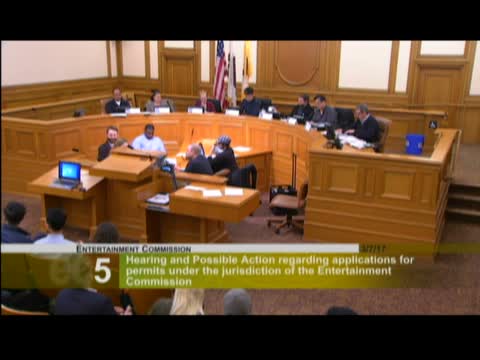
The San Francisco Entertainment Commission spent the bulk of its March 7 meeting on a contested review of Halcyon's place‑of‑entertainment and extended‑hours permits after repeated neighborhood complaints.
Deputy Director Weiland and Inspector Sean Burke presented the enforcement timeline: the commission's inspectors have issued multiple administrative citations for internal sound‑limit violations and attempted administrative resolution without success. Staff and the operator had previously agreed informally that a 110 dB reading at the center of Halcyon's dance floor would put the venue within the legal threshold (8 dB above ambient) but Burke reported a subsequent measurement of 114.5 dB from the dance floor, which exceeds that agreed‑upon operating limit.
Owner Gina Milano described efforts to mitigate noise, saying initial soundproofing work exceeded $100,000 and that the venue is now near $200,000 in improvements: "We actually are close to $200,000 in soundproofing on the building," she said, and added that the operator retained multiple sound consultants and a full‑time sound engineer. Milano and sound engineer Richie said they have removed two low‑frequency bands that testing identified as problematic and that they respond to neighbor texts and calls during events.
Neighbors, however, urged stricter interim controls. Norfolk Street resident Tony Vu said the breakout appears to come through the roof and rear wall and demanded a firm timeline and action, while homeowner Kelly Ellis asked the commission to require a lower post‑2 a.m. threshold and staff availability for after‑hours enforcement. Ellis asked that ambient be measured at 5 a.m. and requested either an effective 0 dB over ambient limit after 2 a.m. or more specific interim conditions.
A third‑party consultant from Salter's firm presented a mitigation plan that includes installing a visible dB monitor in the club within days, and either an internal or external insulation package to address low‑frequency breakout. The consultant estimated an external option would be about a month of on‑site work (plus permitting and contractor lead time) and predicted a potential 15 dB improvement at problem frequencies after full implementation.
Commissioners debated interim options — limiting the number of late nights, requiring a dB limiter (already being installed), demanding a project timeline, or suspending extended hours — and emphasized the special impact of the 2–6 a.m. window when ambient levels fall. Several commissioners said they wanted a short, enforceable schedule. The commission voted to table immediate punitive action and gave Halcyon two weeks to provide a written "road map" (timeline, budget and permitting plan) for the recommended soundproofing; staff said they would review the roadmap and bring the item back for the commission to consider interim conditions if additional citations occur.
The motion to table passed (several yes votes, two no votes recorded). Staff and the operator agreed to continue monitoring and expected further testing; the commission left open targeted enforcement if future readings again exceed the established 110 dB benchmark.