Get Full Government Meeting Transcripts, Videos, & Alerts Forever!
Get email alerts on the Permits topic
No spam. Unsubscribe anytime.
Entertainment Commission approves multiple venue permits, requires local sound checks and good-neighbor conditions
Summary
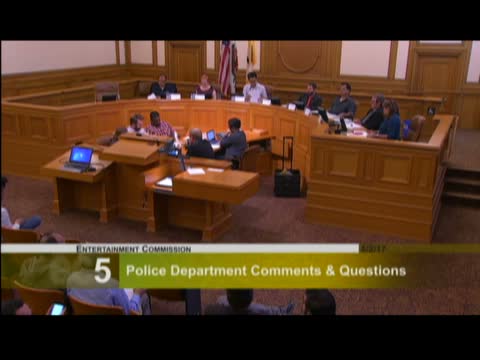
The San Francisco Entertainment Commission approved a slate of place-of-entertainment and extended-hours permits May 2, imposing sound checks, good-neighbor obligations and specific police conditions (camera retention or security) where staff recommended them after neighbor complaints and inspector reports.
The San Francisco Entertainment Commission on May 2 approved several place-of-entertainment and extended-hours permits while sharpening conditions intended to reduce noise impacts on nearby residents and businesses.
The Commission approved a consent-calendared license for Adventure Food & Wine and then granted individual permits for Reconocito Nicaragua, Toy Soldier, Harry's Bar, Halal Guys (extended hours), and Rusted Mule. In the most contested case — Reconocito Nicaragua — commissioners required a post-installation sound test before the permit’s operating levels are enforced and added the commission’s Good Neighbor policy as a condition after an upstairs neighbor described bass that “shakes our windows” and leaves residents sleepless.
President Bridal Tan urged immediate neighbor-to-owner contact to ensure quick resolution: “I would highly recommend both, trading phone numbers right now with your neighbor,” she said during the Reconocito hearing.
Staff described varying levels of outreach and police input across permits: Mission, Central, Northern and Tenderloin stations provided station-level conditions in files; where police recommended cameras or security, the Commission accepted cameras as a baseline and in one case (Halal Guys) agreed to drop a dedicated uniformed guard requirement while keeping a camera requirement after the applicant described internal staff training and on‑site monitoring protocols.
The Commission framed its votes around enforceable conditions: sound tests for venues with recorded music or DJ setups, specific cut‑off hours (where applicable), adherence to the Good Neighbor policy and police-recommended conditions such as camera retention and security notification procedures. Commissioners said they would revoke licenses if repeat, verifiable complaints showed noncompliance.
What happened on the floor
- Reconocito Nicaragua (LLP): Applicant Jose Cabrera acknowledged past DJ use and said weekend DJs are the primary entertainment; a neighbor (Kyla) described repeated daytime and late-night disturbances. The Commission approved the permit with a required sound test and the Good Neighbor policy. Commissioners stressed that continuing complaints could jeopardize the permit.
- Toy Soldier (Belden Alley): Central Station approved the application with conditions to notify Central Station of special events and retain security footage for 21 days; the Commission approved the permit.
- Harry’s Bar (Fillmore at Pine): Owner Rick Howard said the venue previously operated with an entertainment license and sought to reinstate it for primarily weekend DJs and occasional live music. Commissioners approved the permit with police conditions.
- Halal Guys (Tenderloin): The applicant requested extended hours to 4 a.m. Thu–Sat and asked to remove a police condition requiring a uniformed security officer from 2–4 a.m. The Commission kept the camera condition but voted to remove the uniformed-guard requirement while noting staff should be trained to manage late-night circumstances.
- Rusted Mule (Polk): Applicants presented outreach and letters of support including from neighborhood groups; Commission approved the POE permit with the Good Neighbor policy.
Why it matters
Commissioners said they are balancing neighborhood livability with business vitality downtown, stressing enforceable conditions and post‑issuance monitoring. The votes also reflected a recurring theme of this meeting: ensuring complaints are tracked, that complainants know how to notify operators directly, and that sound levels are verifiable through city sound tests and police records.
What’s next
Permitted venues receive conditional authorization and are expected to work directly with neighbors and inspectors. Staff and inspectors said they will track complaints in a master spreadsheet and follow-up where a permittee fails to meet conditions. The Commission also signaled increased scrutiny for repeat complaints and promised to use its enforcement tools if operators do not comply.