Get Full Government Meeting Transcripts, Videos, & Alerts Forever!
Get email alerts on the Bylaws topic
No spam. Unsubscribe anytime.
Entertainment Commission removes three-year term limit for president and vice president
Summary
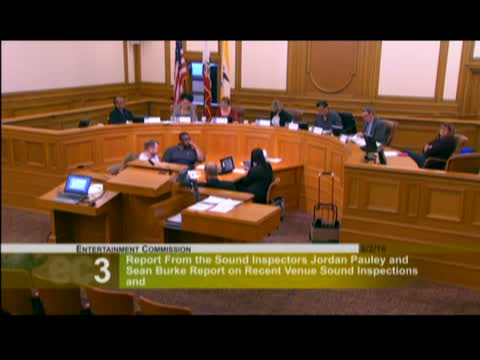
The San Francisco Entertainment Commission voted unanimously Aug. 2 to amend its bylaws, removing a three-year term limit for the commission’s president and vice president to allow longer-serving leadership in line with other city commissions.
The San Francisco Entertainment Commission voted unanimously on Aug. 2 to amend Article 2, Section 1(g) of its bylaws, removing a three-year term limit for the commission’s president and vice president.
The change, presented to commissioners as a technical amendment, drew discussion about continuity and the responsibilities of the chair. An unidentified commissioner explained that most other city commissions do not impose a term limit and that the amendment would align the Entertainment Commission with that practice. Commissioner Thomas said the change ‘‘is a change worth making in terms of keeping us in line with what other commissions do’’ and argued it would provide leadership stability.
Commissioners discussed chair duties beyond presiding over meetings, including occasionally representing the commission at community meetings or hearings and the time commitment required. Several commissioners said the role can require after-hours availability but said the responsibilities were not excessive and that removing the limit would allow experienced leaders to continue if needed.
After no members of the public spoke on the amendment, a motion to remove the three-year term limit was made and seconded. A roll-call vote recorded Aye from Commissioner Frost, Commissioner Lee, Commissioner Thomas, Commissioner Cavanaugh, Commissioner Kim Manong, Commissioner Perez and Vice President Joseph; the motion carried unanimously.
The amendment takes effect per the commission’s bylaws and internal procedures; no external ordinance or statute was cited during the discussion. The body did not record a dissenting vote or conditions attached to the amendment during the meeting.
Next steps: the commission will update its published bylaws to reflect the approved change.