Get Full Government Meeting Transcripts, Videos, & Alerts Forever!
Get email alerts on the Permits Sound Control topic
No spam. Unsubscribe anytime.
Commission grants conditional permit to Gray Area/Grama Area after neighborhood sound concerns; bass limits and isolators required
Summary
After neighbors described intrusive low‑frequency noise, the Entertainment Commission conditionally approved a permit for Grama Area (Gray Area) requiring removal or mitigation of low bass below 50 Hz, seismic isolation for bass cabinets, monthly event calendars to police, and a passing post‑installation sound inspection.
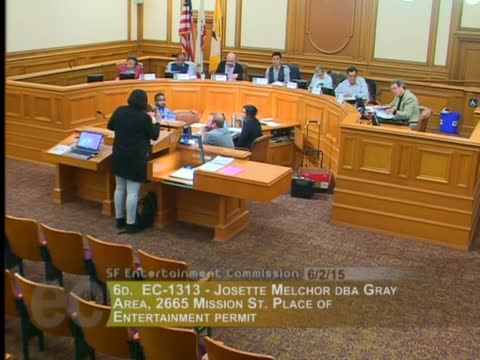
The Entertainment Commission approved a conditional place‑of‑entertainment permit for the Grama Area/Gray Area theater on June 2, 2015, after extensive testimony from the applicant, acoustical consultants and neighbors about ongoing bass and vibration complaints.
Gray Area representatives (Josette and production staff) said they have reconfigured the venue’s sound system from a front‑stack configuration to an 8‑channel surround array, covered exposed ducting that had been radiating sound into neighboring units, installed sound curtains and limiters, and begun doing on‑site neighbor sound checks. They presented a written outreach log and said they had engaged acoustic consultant Shane Merbeck (ARUP) and sound engineer Barry Threw to survey the space and recommend architectural and system changes.
Neighbors told the commission that low‑frequency bass (felt as vibration) remained audible in nearby residences during some events and urged restrictive hours and more extensive structural mitigation. One neighbor reported being awakened at 3 a.m. during an after‑party and said the building’s existing construction would likely require more substantial work (for example, a double wall or floor isolation) to eliminate transmitted bass. Consultants and staff discussed possible technical fixes including seismic isolators, architectural insulation and low‑frequency filtering; commissioners asked the applicant to test the system with frequency cuts and with base cabinets isolated from the floor by damping materials.
The commission’s conditional approval required that: the venue pass a post‑installation sound inspection with staff sound inspectors; low bass energy be limited (commission language identified cutting low‑frequency energy below 50 Hz); bass speaker cabinets be isolated on seismic‑isolation or damping mounts; the permit include security and police notification conditions requested by the Police Department; the operator make monthly event calendars available to staff; and weeknight programming end by midnight with Friday, Saturday and holiday nights allowed to operate until 1 a.m. The permit was approved conditionally and remains contingent on passing the required sound tests and life‑safety signoffs from other agencies.
Supporters of the venue said Gray Area is an arts organization that has worked to reach out to neighbors and has a long record of programming; critics argued the building envelope is inadequately soundproofed for loud programming until more extensive renovation is completed. The commission’s conditions aim to balance neighborhood protection with allowing the arts operator to continue limited programming while mitigation measures and testing occur.