Get Full Government Meeting Transcripts, Videos, & Alerts Forever!
Get email alerts on the Department Budget topic
No spam. Unsubscribe anytime.
City gives SF Environment $2.6M add‑back; department outlines hires, grants and outreach plans
Summary
The Board of Supervisors provided a $2.6 million one‑year add‑back to the Department of the Environment. Staff outlined six spending buckets—including residential electrification, EV infrastructure, healthy‑ecosystem pilots and a racial‑equity coordinator—funding roughly five FTEs (phased hires) plus professional services and community grants; staff said an additional $1.9M would be needed next fiscal year to continue positions.
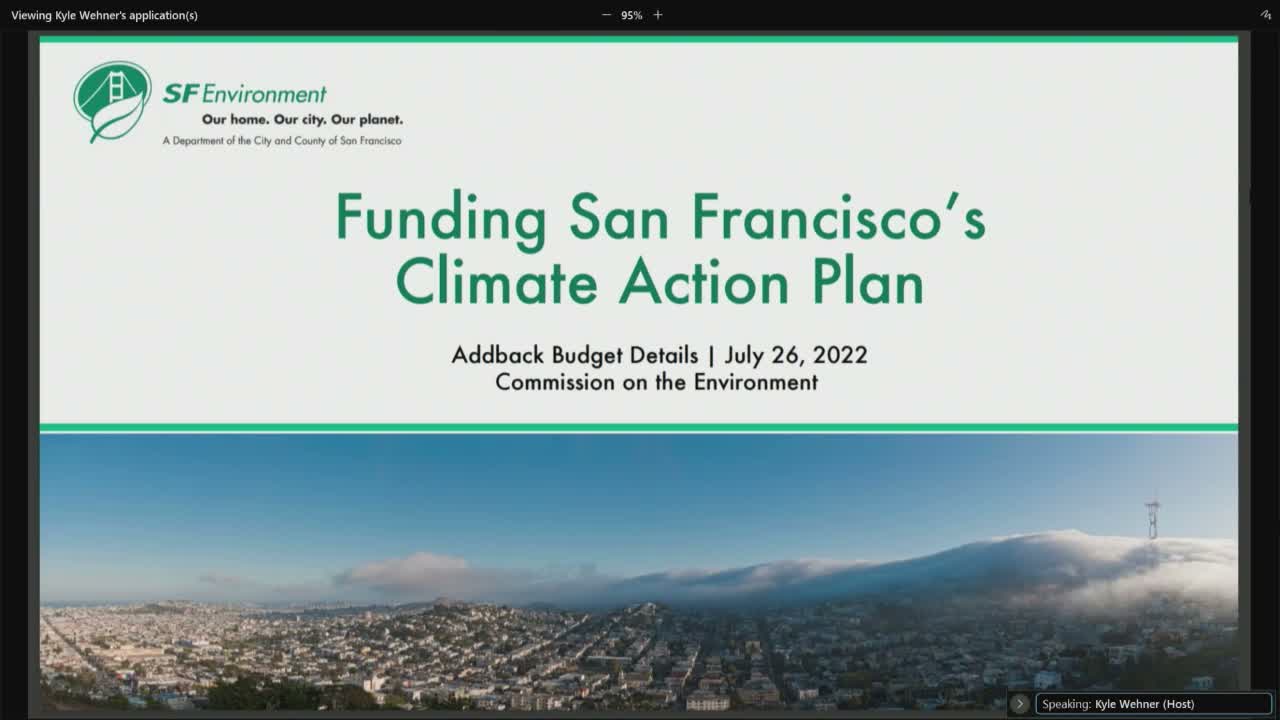
At the July 26 meeting, the Department of the Environment presented how it plans to spend a $2.6 million add‑back the Board of Supervisors approved for one year.
Climate Program Manager Cindy Comerford said the allocation is the largest general‑fund add‑back the department has received and that it will be used across six buckets: building‑sector fossil‑fuel elimination (staffing and technical analysis), inclusive outreach and marketing for the Climate Action Plan, healthy‑ecosystem demonstration projects, transportation and EV infrastructure work, a racial‑equity initiative (including a coordinator), and additional administrative support to scale grantmaking and RFPs.
Commerford described a staffing plan that amounts to about 5.29 full‑time equivalents in year one (new positions phased at partial FTEs to reflect hiring timelines) and significant professional‑services funding intended to flow to community partners as grants. She emphasized the one‑year nature of the add‑back and noted the department will need approximately $1.9 million more in the next fiscal year to retain newly funded positions.
Commissioners urged clear tracking and reporting of expenditures. Commissioner Wald recommended a standing item in the Director's report showing hiring, contract and grant status; staff agreed and said they will provide ongoing updates. Several commissioners also proposed sending a letter of thanks to Supervisors who championed the funding.
Public commenters supported the allocation but urged care in structuring positions and transparency about how grants are distributed.
Next steps: department staff will implement hiring and grant processes, set up reporting to the Commission and public, and complete the long‑term funding study due in September to inform sustainable revenue options.