Get Full Government Meeting Transcripts, Videos, & Alerts Forever!
Get email alerts on the Waste Reduction Ordinance topic
No spam. Unsubscribe anytime.
Commission backs single-use foodware plastics, toxics and litter reduction resolution after amendments and disability community concerns
Summary
The commission voted to approve a resolution supporting the draft single-use foodware plastics, toxics and litter reduction ordinance with editorial and substantive edits, setting phased implementation dates and noting exemptions and outreach to disability and small-business communities.
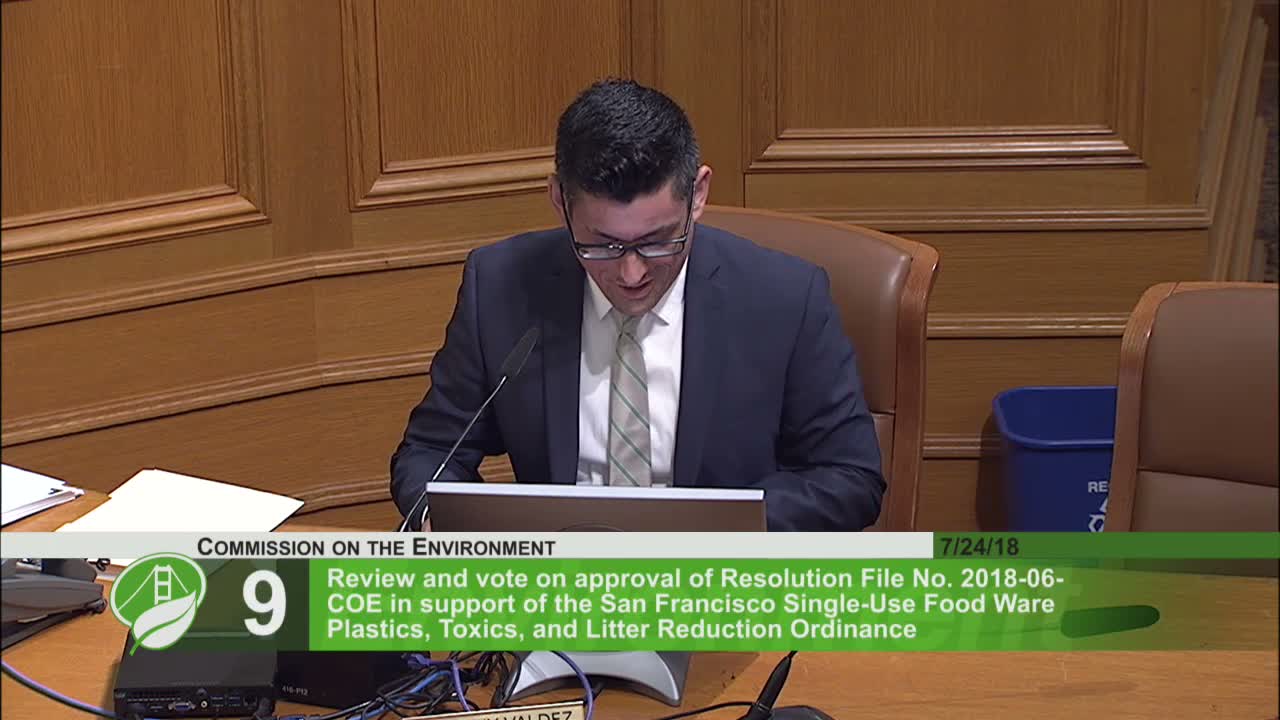
The San Francisco Commission on the Environment voted July 24, 2018 to support a resolution backing the San Francisco single-use foodware plastics, toxics and litter reduction ordinance sponsored by Supervisor Katie Tang and the Department of the Environment. After staff read proposed edits and Commissioners offered amendments, the full commission approved the resolution as edited.
Director Deborah Rafael introduced the ordinance and said it was a forward-looking step to reduce plastics, litter and toxic fluorinated chemicals that enter food and the marine environment. Jack Macy, the department's commercial zero-waste senior coordinator, presented the ordinance's five main components:
- Ban on single-use plastic accessories such as straws, stirrers, cocktail sticks and similar items made of plastic (including compostable plastics when they persist in the environment), with alternatives encouraged; - Require single-use accessories and add-ons be provided only "on request" (including self-serve dispensers when appropriate) to reduce unnecessary disposables; - Require that foodware be certified industrially compostable and free of fluorinated chemicals by an established third-party certification (the transcript references BPI-style certification and a fluorinated-chemical test to be adopted and phased in by 01/01/2020); - A requirement (phased in) that a percentage of reusable cups be used at outdoor events (the presentation referenced a 10% threshold for events and city facilities); and - A mechanism to set recycled-content requirements in products in a later phase after market evaluation.
Jack Macy cited local examples of businesses that reduced straw use by over 90% after moving to "on-request" policies and described industry engagement, certification timelines (the fluorinated-chemical test is anticipated to be added to the compostability certification process with a 1/1/2019 start for the testing program and a goal of full recertification by 01/01/2020) and provision for reasonable compliance and outreach to affected businesses.
Commissioner Wald proposed several editorial clarifications (change "marine plastics" to "plastics in the marine environment," adjust phrasing about urban runoff and sentence structure, and add a whereas clause noting efforts with business and disability communities and a one-year preparation period). Staff and the deputy city attorney confirmed that some edits should be adopted as formal amendments; the commission directed staff to record the edits.
During public comment, Lawrence Carter Long of the Disability Rights Education and Defense Fund urged that the ordinance provide concrete, operational protections for people with disabilities who rely on plastic straws and requested clear guidance on how accommodations and exemptions will be implemented in practice (how individuals demonstrate medical need and how businesses will ensure access to necessary straws).
After the amendment process concluded, Commissioner Sullivan moved for approval of the resolution as edited; Commissioner Wald seconded. The chair called the vote; "Aye" votes were recorded and President Bermejo announced the motion carried. The resolution passed at the meeting; the transcript records the motion, second and the chair's announcement that the motion carried.