Get Full Government Meeting Transcripts, Videos, & Alerts Forever!
Get email alerts on the Healthy Nail Salons topic
No spam. Unsubscribe anytime.
San Francisco expands Healthy Nail Salon program to include worker rights and anti‑trafficking training
Summary
San Francisco’s Department of the Environment, Department on the Status of Women and the Asian Law Caucus described a voluntary Healthy Nail Salon program that now includes trainings on labor rights, trafficking awareness, and health‑care access for primarily immigrant women technicians; presenters said ~250 salons operate in the city and over 50 are recognized as healthy salons.
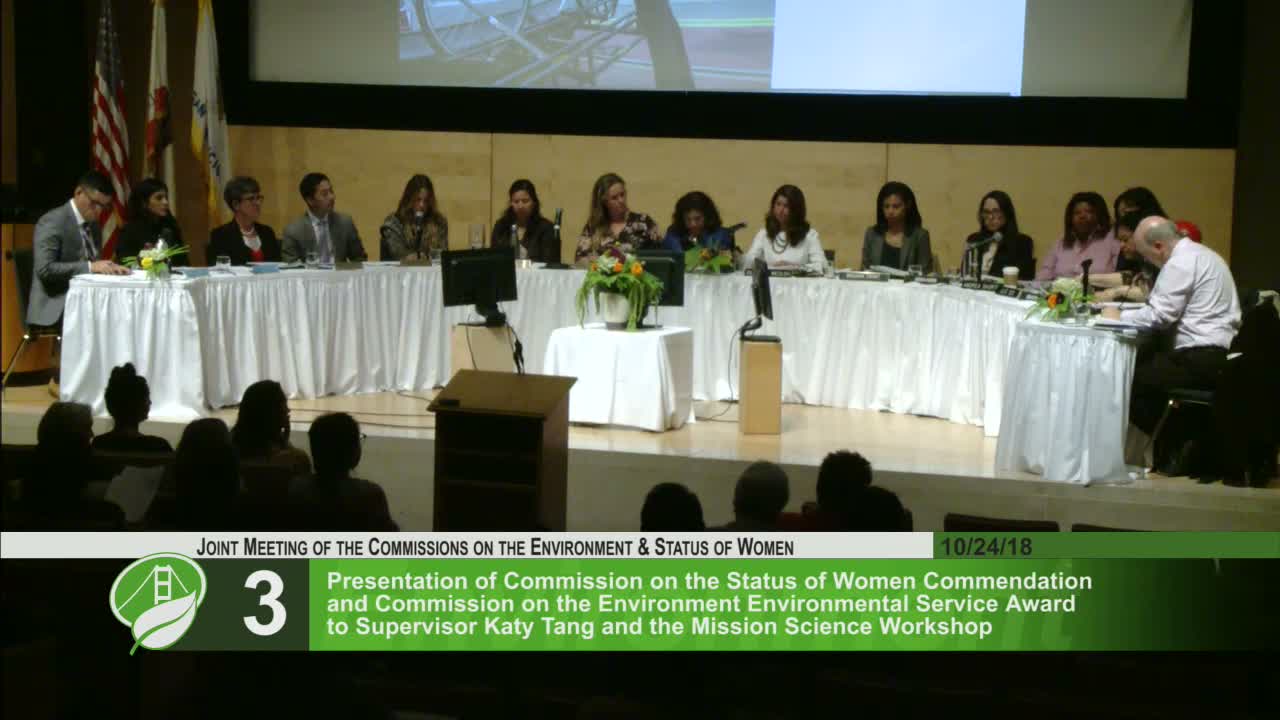
San Francisco officials described an expanded Healthy Nail Salon program at a joint meeting of the Commission on the Environment and the Commission on the Status of Women, saying the voluntary initiative now combines chemical‑exposure prevention with labor‑rights education and trafficking awareness aimed at protecting primarily immigrant women who work in nail salons.
"Technicians that work at nail salons in San Francisco are primarily women of color coming from immigrant communities and are of childbearing age," Megan Kalsman, who coordinates the city’s commercial reduction work, told the commissions. Kalsman outlined program criteria: salons seeking recognition must eliminate the 'toxic trio' (formaldehyde, toluene and dibutyl phthalate) and avoid methyl ethyl ketone in products, improve ventilation, use personal protective equipment and designate safer areas for acrylic services. The program also provides in‑salon training in the worker’s preferred language.
Kalsman provided program numbers: the city has about 250 nail salons, more than 50 recognized Healthy Nail Salons, and the program has trained over 500 technicians since 2012. She said nearly 200 salons across California are now recognized under similar programs and that recent state legislation has provided guidance to help other jurisdictions replicate the model.
Manush/Minush Kandel, women’s policy director at the Department on the Status of Women, explained why the trafficking content was added: San Francisco staffs a mayoral task force on anti‑human trafficking formed in 2013, and the department compiles multi‑agency data on trafficking. "In our last report we had agencies identifying 529 cases of human trafficking in San Francisco," Kandel said, noting the dataset contains duplicate reporting across agencies but underlines scope and need.
Victoria Chan of Advancing Justice Asian Law Caucus described the labor‑rights module added to the salon curriculum. The Caucus supplied content on misclassification, minimum wage, overtime, meal and rest breaks, tip rules, workers’ compensation and access to low‑cost health care and legal clinics. Chan said those additions helped workers better understand where to seek help and how to assert employment rights.
Commissioners asked about recruitment and scalability. In response, Kalsman said the program is free and voluntary by design to build trust with owners; the state Department of Toxic Substances Control is producing toolkits based on San Francisco’s criteria to help spread the program. Commissioners suggested repeating and expanding outreach in areas with fewer recognized salons and exploring whether licensing/continuing education could incorporate health and safety information, while acknowledging state regulation and inspector capacity limit mandates.
Presenters and commissioners described the program as a model for intersectional outreach — combining occupational health, workers’ rights and trafficking awareness in workplace trainings — and signaled plans to continue outreach and coordinate with state partners to expand the curriculum and materials.