Get Full Government Meeting Transcripts, Videos, & Alerts Forever!
Get email alerts on the Clean Energy Transition topic
No spam. Unsubscribe anytime.
State and city officials outline steps to reach 100% renewable energy and cut building emissions
Summary
San Francisco Department of the Environment and California Energy Commission representatives described strategies to reach 100% renewable energy, including doubling energy-efficiency savings under SB 350, building electrification, stretch codes, and expanded data sharing to track emissions.
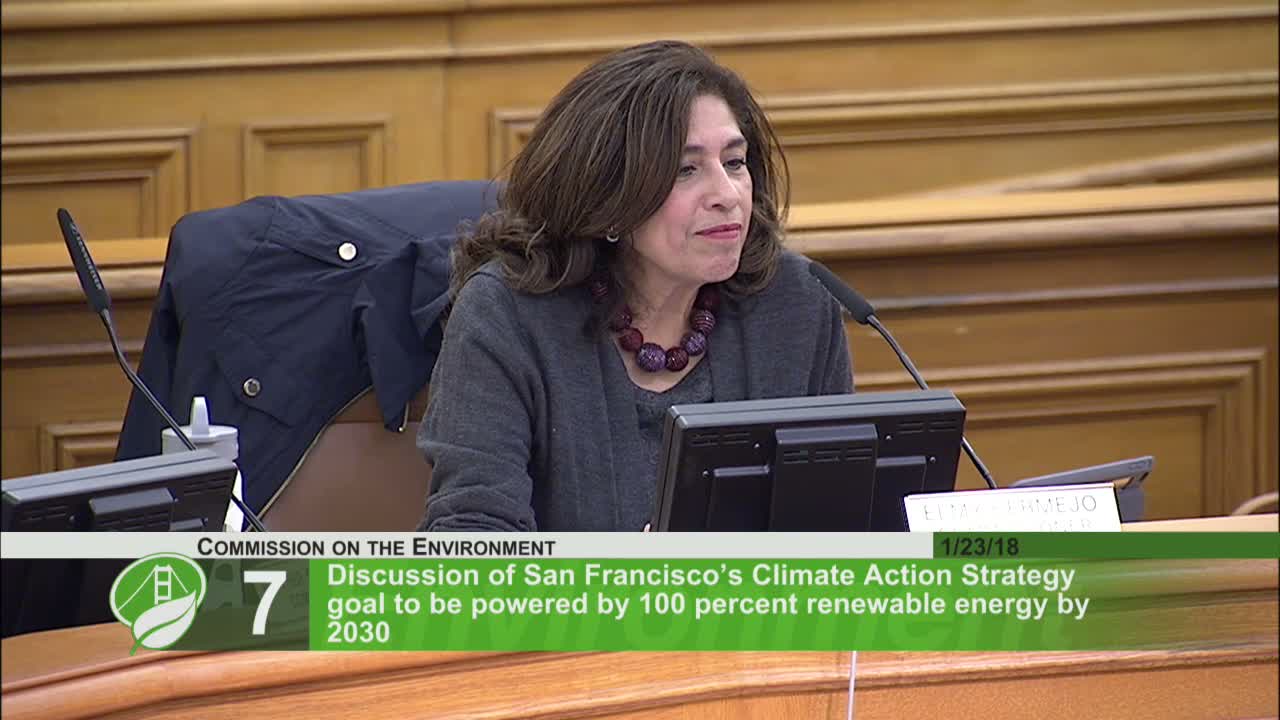
State and city officials presented a multi-pronged approach to San Francisco’s Climate Action Strategy at the Jan. 23 Commission on the Environment meeting, emphasizing energy efficiency, electrification and expanded renewable supply.
Andrew McAllister of the California Energy Commission summarized the state mandate under Senate Bill 350 and the Commission’s goal to “double the flow of energy efficiency savings” through programs, standards and market engagement. McAllister described recent regulatory milestones — including a January backstop lighting standard (minimum 45 lumens per watt) — and urged cities to use stretch codes and collaborate on building standards to reach 2030 targets.
Director Deborah Rafael and city staff outlined local efforts: San Francisco Energy Watch’s direct-install program, the BayREN multifamily initiative, CleanPowerSF procurement, and the city’s EV and distributed energy programs. Kathleen Bridal, senior energy specialist, reported Energy Watch results — more than $25 million in incentives and nearly 7,900 completed projects — and highlighted financing tools including PG&E on-bill financing and microloans to lower upfront barriers for small businesses and multifamily owners.
Speakers emphasized that transportation (about 46% of local emissions) and natural-gas use in buildings remain the largest challenges. CEC and city staff recommended a combined strategy of reducing energy demand, decarbonizing electricity supply, and fuel-switching end uses (heat pumps and electric vehicles). David Hookshields (CEC) urged local boldness: “Keep being bold,” he told the commission, noting accelerating renewable deployments and the role of storage and vehicle electrification in integrating variable generation.
Commissioners questioned how state programs prioritize disadvantaged communities, how local governments can secure better utility data, and what timelines are realistic for retrofits of existing building stock. Officials said data-regulatory updates and interagency coordination are underway to support local planning and implementation.