Get Full Government Meeting Transcripts, Videos, & Alerts Forever!
Get email alerts on the School Composting topic
No spam. Unsubscribe anytime.
San Francisco schools program aims to teach 20,000 students composting through 'Food to Flowers' outreach
Summary
The Department of the Environment’s school outreach program "Food to Flowers" reaches roughly 20,000 K–12 students annually with assemblies, compost-monitor training and field trips; staff link composting to habitat and biodiversity as a way to motivate behavior change.
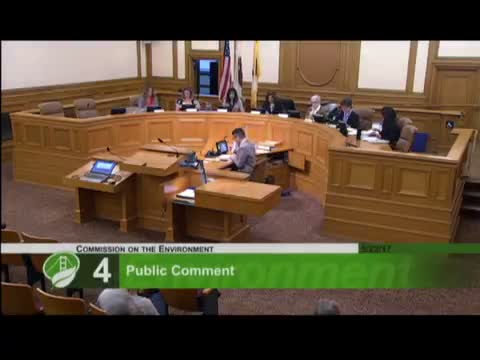
Samara (introduced as "Samara Hurwitz") and Tamar Hurwitz, who manage the Department of the Environment’s school education work, presented the Food to Flowers school composting program and described how the city reaches students with zero‑waste messaging.
The program, Hurwitz said, reaches about 20,000 K–12 students each year across San Francisco public and private schools through assemblies, a 7‑foot mascot ("Phoebe the Phoenix"), classroom presentations, compost‑monitor training in cafeterias, field trips to Pier 96 transfer station and printed and online curriculum translated into Spanish and Chinese. Hurwitz told commissioners the program diverts "thousands of tons a year" from landfill and estimated “about maybe 5,000 tons a year" in aggregate diversion from school outreach.
Commissioners asked practical questions about scale and follow‑up. Hurwitz said the program works with roughly 70 schools a year but that the exact roster varies; the city receives monthly diversion reports only from district (public) schools, not from private schools where diversion data is held by private contractors such as Recology. To address variable classroom practice and after‑school settings, staff said they rely on large assemblies followed by lunchroom coaching and occasional targeted classroom visits and trainings for teachers and custodial staff.
Hurwitz also described messaging choices intended to engage children: framing zero waste as protection of animal habitat and living trees rather than as abstract landfill concepts, emphasizing "reduce and reuse" ahead of recycling, and using games and in‑school activities to sustain behavior after an assembly. Commissioners and staff discussed further outreach opportunities, including summer planning to prepare digital resources and classroom visit pilots before the next school year.
The presentation closed with a call from commissioners for more shared digital materials and follow‑up workshops with parents and PTA volunteers; staff agreed to explore a summer brainstorming session to develop classroom and digital resources.
The commission took no formal action on this item; it was a staff presentation followed by Q&A.