Get Full Government Meeting Transcripts, Videos, & Alerts Forever!
Get email alerts on the Pesticide Policy topic
No spam. Unsubscribe anytime.
Public and commissioners press department on reduced-risk pesticide list ahead of March vote
Summary
Policy committee staff reported an 81% reduction in use of the most hazardous herbicides on city properties; public commenters and advocacy groups urged stricter limits, questioned metrics and called for an explicit "standard of harm" and greater protections for children and environmental justice neighborhoods.
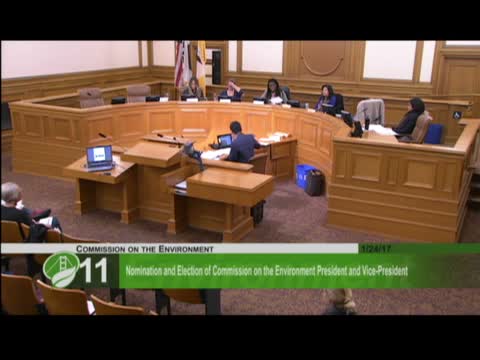
The commission's policy committee update and an extended public-comment period on Jan. 24 focused on the city's draft 2017 reduced-risk pesticide list and broader questions about herbicide and pesticide use on public lands.
Staff told the commission the first draft of the reduced-risk list follows prior committee direction and that, according to staff calculations, the city achieved an "81 percent overall reduction in the most hazardous herbicides used on city properties" over the past year. That figure and other metrics were debated extensively during public comment.
Public commenters described differing perspectives on how to assess pesticide use. Eric Brooks of the San Francisco Green Party argued for shifting the policy frame to a "standard of harm," saying officials should weigh the health and environmental hazard of a pesticide against the harm of the condition it addresses. "We need to switch to a standard of harm," he said during public comment.
Speakers from the Forest Alliance and other advocates criticized ongoing applications in the Natural Areas Program, questioned the metrics used (applications versus pounds of active ingredient) and warned about proposed tree removals tied to park plans. Several commenters urged tighter limits around areas frequented by children and stronger mapping of where applications occur, particularly in Southeast neighborhoods.
Commissioners acknowledged substantial reductions reported by staff but urged focused, specific proposals ahead of the March vote; several commissioners encouraged an iterative policy process and asked for additional technical hearings and clearer, targeted metrics for the remaining uses.
No final policy was adopted at the Jan. 24 meeting; staff and the policy committee will continue work before the scheduled March consideration.