Get Full Government Meeting Transcripts, Videos, & Alerts Forever!
Get email alerts on the Zero Waste Grants topic
No spam. Unsubscribe anytime.
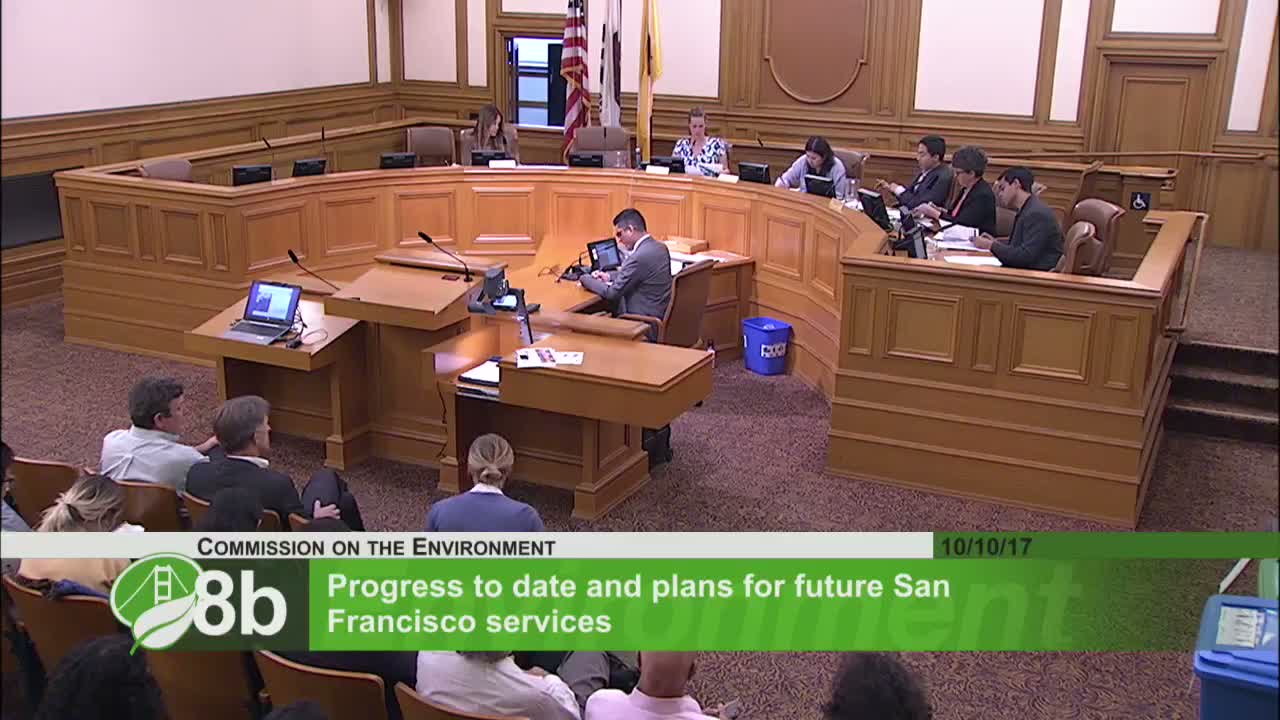
Commission approves $857,000 in zero‑waste grants to 13 local groups
Summary
The commission approved an amended resolution funding 13 organizations with $857,000 for zero‑waste projects over two fiscal years (2017–2019); grantees include workforce, textile reuse and food‑recovery programs and are subject to quarterly reporting and performance goals.
The San Francisco Commission on the Environment voted to approve a resolution allocating $857,000 in 0 Waste grants to 13 organizations, funding projects the department said will divert material from landfill and provide social co‑benefits.
Alexa Kilty, Residential 0 Waste assistant coordinator, told commissioners the grant program prioritizes pounds or tons diverted relative to cost‑effectiveness as well as social benefits such as edible food redistribution and workforce development. The funds are drawn from refuse rate revenue and cover two fiscal years (2017–2019).
Kilty said the department received more than 20 applications and had about $857,000 available; 13 organizations were recommended for funding. Among the grantees discussed were the Asian Pacific American Community Center (targeting outreach in Visitacion Valley, the Tenderloin and South Market), Boys and Girls Club youth leadership programs, Recycle for Change (textile collection), UCSF (back‑of‑house sorting and campus outreach), BioLink Depot (donation of lab equipment to schools), Friends of the Library, Garden for the Environment, SCRAP (creative reuse), San Francisco Conservation Corps, SF State (textile collection and repair), the San Francisco wholesale produce market, and Literacy for Environmental Justice.
Kilty said grantees must submit quarterly and final reports and cannot be paid unless they meet stated goals, allowing the department to track tons diverted and program performance. After commissioner questions about the application pool and funding origins, the commission moved, seconded and approved the resolution as amended (resolution file number 2017-06-COE) by voice vote.
The department said it can return with post‑award reporting at the end of the two‑year cycle so the commission can see outcomes and the potential for scaling successful programs.