Get Full Government Meeting Transcripts, Videos, & Alerts Forever!
Get email alerts on the Refuse Rate Process topic
No spam. Unsubscribe anytime.
San Francisco panel hears overview of refuse-rate process; new ratepayer advocate outlines outreach plan
Summary
San Francisco officials outlined the refuse-rate review timetable tied to a 1932 refuse ordinance and introduced Duane Jones as the ratepayer advocate, who described multilingual outreach, community meetings and tools for public input ahead of a technical workshop and director's hearings in spring 2017.
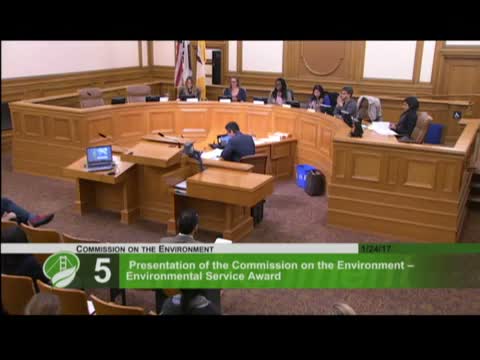
The San Francisco Commission on the Environment on Jan. 24 heard a presentation on the city's refuse-rate review process and met the newly selected ratepayer advocate ahead of a formal rate application expected in February.
Director Deborah Rafael told commissioners the refunding and permitting rules date to the 1932 Refuse Collection and Disposal Ordinance and that the director of public works, under Section 6 of the ordinance, will determine whether proposed rates are "just and reasonable." She said the process includes technical workshops, a series of director's hearings, a staff report and a Prop 218 protest hearing that could block a rate adjustment if a majority of affected ratepayers submit written protests.
"Recology submits a final application, we hold technical workshops, then director's hearings and a staff report leading to a recommended order," Julia Dawson, deputy director of finance and administration for Public Works, told the commission.
Duane Jones, president and CEO of RDJ Enterprises, introduced himself as the competitively selected ratepayer advocate for this cycle and outlined outreach plans he said would focus on neighborhood meetings, community newspapers and interpreters. "Our job is to make sure we exhaust all avenues of outreach and engagement," Jones said, describing a multilingual phone intake, an independent summary review of the draft application and a commitment to respond to calls within 48 hours.
Commissioners pressed Jones and staff about language access and how many residents they expected to reach. Jones said the team planned to reach "somewhere in the neighborhood of a couple of thousand folks" through clustered meetings and broader reach via neighborhood papers and electronic channels.
Public commenters asked for earlier and clearer disclosure of the proposed rate changes. David Pilpel, who has participated in prior rate proceedings, said a roughly 15 percent increase had been discussed publicly and requested more detail on service and rate changes before formal hearings.
The city's timeline calls for completing director's hearings and, if necessary, rate-board review by late spring so new rates could take effect July 1, 2017. The commission did not take formal action on rates at the Jan. 24 meeting; staff said the final application and public technical workshop would follow in February.