Get Full Government Meeting Transcripts, Videos, & Alerts Forever!
Get email alerts on the Transportation Climate topic
No spam. Unsubscribe anytime.
BART outlines plan to decarbonize electricity and boost ridership; City panel discusses coordination
Summary
BART officials told the Commission the transit agency is pursuing policies to reduce greenhouse-gas emissions from its electricity procurement, deploy on-site solar for stations and yards, pilot EV charging at stations and invest in service and station improvements to increase ridership.
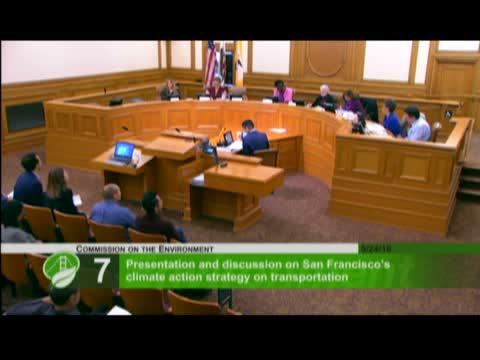
Nick Josefowicz, a BART Board member, and Holly Gordon, BART’s sustainability manager, presented BART’s emerging strategy to reduce greenhouse-gas emissions and prepare for an increasingly electrified regional transportation system. Josefowicz said BART is moving toward a policy of purchasing greenhouse-gas-free electricity and deploying on-site solar where feasible, while recognizing the operational complexity of powering traction loads. He described station- and yard-level solar as a near-term priority and said the agency is exploring procurement and storage options to reduce carbon intensity.
Holly Gordon described operational opportunities: more on-site solar and pilot smart waste receptacles, efficiency measures (train washing, toilets) and station improvements. The presenters discussed strategies to increase ridership, including a reworked station access policy that looks beyond station property to improve pedestrian and bike access, procurement of new train cars to increase capacity, and a potential bond to upgrade train-control and electrical systems. Commissioners asked about the procurement mix, coordination with city agencies on access and waste-reduction plans and the role of station EV charging and bike-share integration.
BART emphasized collaboration with city agencies and suggested opportunities for joint work on waste diversion, renewable procurement and station-area access improvements that could shift more trips to transit.