Get Full Government Meeting Transcripts, Videos, & Alerts Forever!
Get email alerts on the Textiles topic
No spam. Unsubscribe anytime.
City outlines textile-diversion push; Recology pilots curbside and building pickup tests
Summary
City staff and Recology described an initiative to divert textiles (clothing, linens, shoes) from the landfill through expanded drop-offs, building-based collection bins and curbside pilot routes; staff said textiles represent roughly 20,000 tons of the city's waste stream.
San Francisco’s Department of the Environment and Recology presented a multi-pronged effort to reduce textile waste, a material stream the department estimates at about 20,000 tons annually, and described pilot tests for collection and outreach.
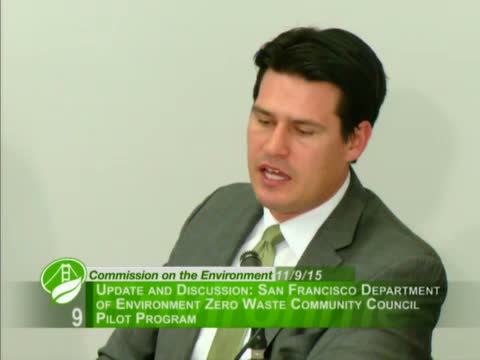
Alexa Kielty, the department’s zero-waste specialist, said textiles (clothing, shoes, linens, backpacks and related items) make up an estimated 20,000 tons of the city’s landfill stream and that the department seeks to increase local reuse and collection convenience. "Textiles make up about 20,000 tons of that 420,000 tons," Kielty told the commission as she outlined awareness campaigns, existing drop-off locations and grants to expand collection bins in buildings.
Paul Giusti of Recology reviewed multiple pilots currently under way: postcards and direct mail to targeted routes; placement of clear bags or labelled boxes next to recycling bins for special pickup; an approach that puts a tan textile bag inside blue recycling bins so workers can spot and pull textile loads at the sorting facility (Pier 96); and building-based collection containers in laundry rooms with dedicated pickup routes. He said collected material goes primarily to Goodwill for local sorting and reuse and to secondary markets for shredded fiber products when not reusable.
Commissioners asked about pilot geography and timeline; Recology said bulky-item textile pickup is citywide and additional pilots focus on areas such as Diamond Heights and Noe Valley for enhanced outreach, with apartment programs in South of Market. Members of the public and nonprofit reuse organizations suggested marking natural-fiber clothing for composting opportunities and asked whether dryer lint should be diverted; staff said lint could enter textile streams for secondary processing depending on composition.
Next steps: Recology will run at least one year of pilot testing and report back with metrics (tons collected, participation rates and cost per ton) to determine whether curbside textile collection should be scaled.