Get Full Government Meeting Transcripts, Videos, & Alerts Forever!
Get email alerts on the Community Choice Aggregation topic
No spam. Unsubscribe anytime.
Commission backs moving Clean Power SF forward and offers Environment Department collaboration
Summary
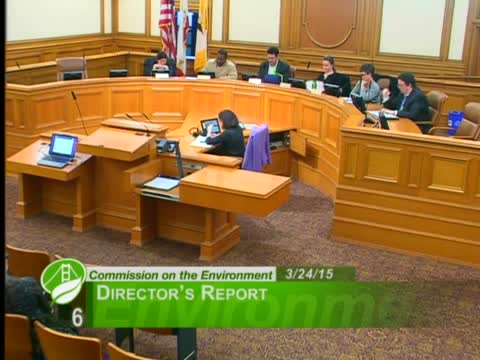
After hearing technical briefings from Sonoma Clean Power, LAFCO and the SFPUC, the San Francisco Commission on the Environment voted to send a letter supporting the proposed Clean Power SF community choice program and offered Department of the Environment help on outreach and behind‑the‑meter programs.
The San Francisco Commission on the Environment voted to send a letter to the San Francisco Public Utilities Commission supporting the city’s proposed community choice aggregation program, Clean Power SF, and offered the Department of the Environment’s assistance on community outreach and planning for behind‑the‑meter energy efficiency and renewable projects.
The action followed a multi‑speaker briefing on the technical, economic and programmatic design of a city‑run CCA. Jeff Cyphers, chief executive officer of Sonoma Clean Power, described Sonoma’s experience serving more than 150,000 accounts and offering a default “light green” product that competes on price along with a premium 100% renewable option. “We serve 150,000 accounts,” Cyphers said, and reported participation and retention rates his team used to shape Sonoma’s product mix.
Jason Fried, executive officer at LAFCO, summarized the EnerNex‑commissioned report that analyzes local build‑out, timing and job potential; the report is available on LAFCO’s website and informed the commission’s discussion of program design and local economic impacts. Fried said the EnerNex work was intended to answer outstanding technical questions and to identify where further study is needed.
Barbara Hale, assistant general manager for power at the SFPUC, outlined the PUC’s business planning and a proposed phased roll‑out with two customer tiers: an affordability‑focused default offering priced to compete with PG&E’s default service and an opt‑up, higher‑renewables product. Hale said the PUC expects to present its business plan to the commission in April, set not‑to‑exceed rates with the Rate Fairness Board in mid‑April, begin procurement and aim for a program launch by the end of the year with full enrollment in early 2016. “Leading with affordability is the objective,” Hale said of the default product.
Kathleen Bridal of the Department of the Environment described how the department’s longstanding energy efficiency programs — San Francisco Energy Watch and the BayREN multifamily program — could integrate with CCA design to expand behind‑the‑meter projects, deeper incentives and accessible financing for multifamily and small business customers. Bridal noted the department contributes about 40% of the energy‑efficiency savings in San Francisco that appear in PG&E’s local portfolio and urged using CCA revenues and grants to scale deeper projects.
Public commenters and local advocates urged the commission to press for strong local benefits. Jed Holtzman of 350 Bay Area and Eric Brooks of the San Francisco Green Party highlighted the EnerNex finding of roughly 9,000 potential jobs from large‑scale build‑out (about 4,500 within a local/regional zone, according to discussion) and urged the commission to require local hiring, prevailing wages and apprenticeship connections.
Following discussion the commission approved a motion directing the director to prepare and send a letter to the SFPUC expressing support for moving forward with the updated Clean Power SF design — summarized in the motion as a product that is “affordable, green, and creates local union jobs” — and offering SF Environment’s help on outreach and planning for behind‑the‑meter measures. Commissioner Stevenson moved the motion; Commissioner Juan seconded, and the motion passed by voice vote.
Director Deborah Rafael said staff will draft the letter and circulate it for commission review and that the commission will return to the item as more program details are finalized.
What’s next: the SFPUC is scheduled to preview its business plan in April, consider rate setting with the Rate Fairness Board in mid‑April, and to begin procurement steps aimed at a program launch later this year followed by full post‑bill opt‑out enrollment in early 2016. The commission’s letter will be sent while the SFPUC completes those steps.