Get Full Government Meeting Transcripts, Videos, & Alerts Forever!
Get email alerts on the City Budget topic
No spam. Unsubscribe anytime.
Department of the Environment’s FY2014–15 budget approved despite major clean-transportation shortfall
Summary
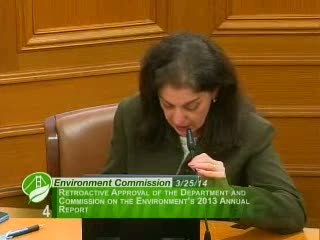
The Commission on the Environment approved the Department of the Environment’s FY2014–15 budget on March 25 while staff warned a lapse of an earmark will leave a significant shortfall in Clean Transportation funding that could end the city’s electric-vehicle program without new general-fund support.
The Commission on the Environment approved the Department of the Environment’s fiscal year 2014–15 budget on March 25 after staff outlined a shortfall that threatens the city’s Clean Transportation work, including electric-vehicle programs.
Acting Director David Osserman told commissioners that "the 1 area where we do have a significant shortfall is in the area of clean transportation, where we had a earmark that has sustained our electric vehicle work ... that has now ended or will end as of June 30." He said the department is seeking general-fund support and will meet with the mayor’s budget director the following day to try to fill the gap.
Why it matters: Osserman warned the shortfall goes beyond capital funding to personnel costs, saying, "We would not have an electric vehicle program if we did not get support," and that grants identified for installations typically do not cover staff needed to coordinate and administer projects. Commissioners repeatedly pressed staff for contingency plans if general-fund support is not approved.
Details and context: Osserman presented program-level sheets and visual charts showing revenues and expenses. He listed the department’s major funding sources and amounts, saying, as presented, the largest single line was "impound to comp is by far the largest at $9,600,000," with energy grants at $7,000,000 and $1,600,000 coming from other departments; smaller streams included $448,000 in clean-air grants and $368,000 in environmental-justice grants. He cautioned the budget remains subject to change because labor negotiations are unresolved and must be incorporated after settlement.
Commissioners pressed staff on which services would be cut if the shortfall persists. Commissioner Ruth Gervanis asked for a Plan B; Osserman replied cuts would mean reduced services and specifically said personnel-dependent programs like the electric-vehicle work would be at risk. Commissioner Josefowicz questioned increases in outreach spending and reductions in climate-renewables funding; Osserman said the renewables cut reflected a reduced work order from the San Francisco Public Utilities Commission and that the outreach increase was largely a realignment of existing outreach staff into program budgets rather than new hires.
Public comment and vote: Eric Brooks, representing San Francisco Clean Energy Advocates and the San Francisco Green Party, urged the commission to restore "Clean Power SF" to the Climate Action Strategy, arguing the program could generate funds and jobs that would offset budget losses. After public comment the commission moved and seconded the budget; no objections were recorded and the budget was approved by voice.
What’s next: Osserman said the department will discuss the shortfall with the mayor’s budget director and will appear before the Board of Supervisors for hearings in June. Any changes resulting from labor negotiations or new grant awards will be incorporated as the budget proceeds through the city process.