Get Full Government Meeting Transcripts, Videos, & Alerts Forever!
Get email alerts on the Water Conservation topic
No spam. Unsubscribe anytime.
PUC outlines drought strategy and new online tool as department expands school outreach
Summary
SFPUC staff described drought-era conservation steps including a mayor-directed 10% systemwide reduction goal, expanded rebates and a new 'my account' portal to show daily water use; Department of the Environment outlined a school curriculum reaching thousands of students.
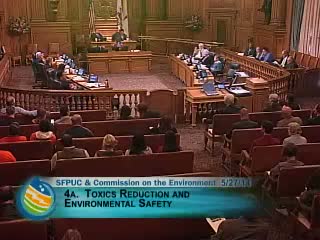
San Francisco — Responding to continuing dry conditions, the San Francisco Public Utilities Commission detailed water conservation measures, outreach and new customer tools at the joint commission meeting.
Steve Ritchie, assistant general manager for water at SFPUC, said the city requested a systemwide 10% reduction in demand to address drought risk and explained the modeling behind that goal: it helps the city manage a potential three‑year dry run and avoid more severe rationing later. He said residential demand in San Francisco averages about 49 gallons per day per resident — among the lowest in the state — but the system needs further reductions in the wholesale service area to meet the target.
Ritchie highlighted a May 20 launch of a "my account" web portal that allows customers to view daily water use, and described expanded rebates and direct-install programs for toilets and washers, community garden irrigation meters, outdoor landscape grants and an upcoming public education campaign to accelerate conservation.
Tamar Hurwitz, environmental education manager at the Department of the Environment, described classroom and outreach programs supported by the PUC: a fifth‑grade water pollution prevention presentation, a water curriculum available to teachers, ‘‘drink tap’’ assemblies in school cafeterias and teacher workshops that together have reached thousands of students and distributed Hetch Hetchy stainless steel bottles in participating schools.
Commissioners asked about measurement of program effects, the scope of rainwater capture and incentives, and coordination with Rec & Park on irrigation improvements; staff said household fixture replacements (toilets and washers) are the most cost‑effective savings measures and that they are reinvigorating rain barrel and cistern programs as part of the drought campaign.