Get Full Government Meeting Transcripts, Videos, & Alerts Forever!
Get email alerts on the Integrated Pest Management topic
No spam. Unsubscribe anytime.
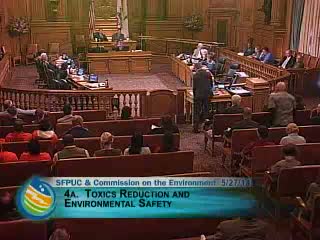
City staff highlight 16‑year IPM program and new Harding Park plan to cut pesticide use
Summary
Department of the Environment staff described an integrated pest management program established by ordinance in 1996 that has cut city pesticide use dramatically and identified golf course management at Harding Park as a priority for further reductions and collaboration with SFPUC and Rec & Park.
San Francisco — Department of the Environment staff told a joint meeting of the San Francisco Public Utilities Commission and the Commission on the Environment that the city’s Integrated Pest Management (IPM) program, established by ordinance in 1996, has substantially reduced pesticide use while increasing professional oversight.
Chris Geiger, who works on the toxics reduction team, said the city has used prevention and science to shift away from broad chemical applications. He summarized long-term trends as an "84 percent reduction in pesticides since the beginning of the program" and a near‑elimination in the use of many insecticides.
Geiger and Rec & Park staff singled out tournament golf at Harding Park as a major pesticide user and a technical priority. The presenters described a new Harding Park IPM plan developed with outside experts, manager trainings, and techniques such as spot spraying and biological controls that can lower overall chemical use while supporting course standards for televised tournaments.
Nikki Mixon (Department of Public Works), Kevin Wollan (Recreation & Park IPM coordinator) and Matt Pruitt (Harding Park IPM specialist) outlined practical steps already in place on medians and course landscapes and emphasized licensure, monitoring and public education as keys to continued progress.
Commissioners requested additional coordination with SFPUC where course landscapes adjoin PUC properties and thanked staff for the data and trainings that support practical implementation.