Get Full Government Meeting Transcripts, Videos, & Alerts Forever!
Get email alerts on the Enforcement Reform topic
No spam. Unsubscribe anytime.
Ethics Commission adopts streamlined enforcement program to speed low-level resolutions
Summary
The commission unanimously adopted a revised fixed-penalty policy and a Streamlined Administrative Resolution Program (SARP) expanding eligible violations from 4 to 41 categories, setting scaled penalties and warning-letter options to speed case resolution and free investigative capacity for larger matters.
The San Francisco Ethics Commission on Jan. 11 voted unanimously to adopt a revised fixed-penalty policy and implement a Streamlined Administrative Resolution Program (SARP) intended to accelerate resolution of routine campaign and lobbyist violations.
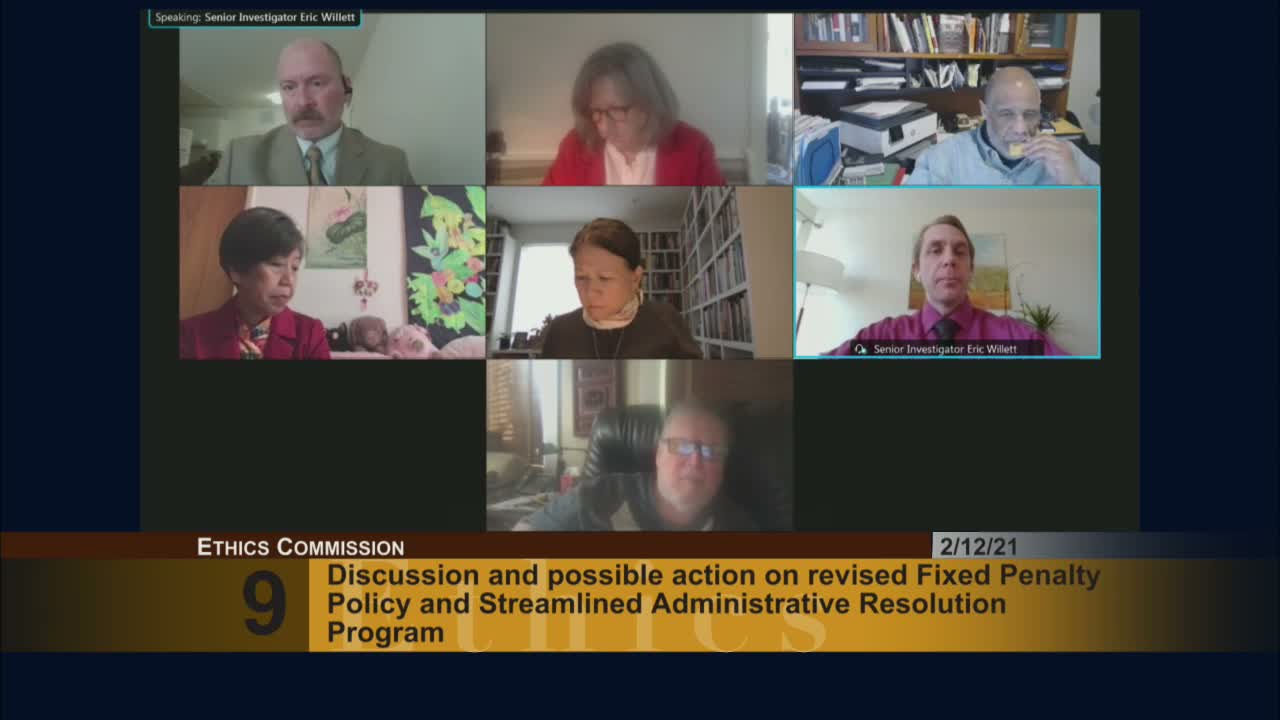
Senior Investigator Eric Willett presented the proposal, which would expand the current fixed-penalty program from four provisions to 41 provisions across the Campaign and Governmental Conduct Code. Staff said they modeled penalty thresholds on the state FPPC27s streamlined settlement program but scaled amounts upward to reflect San Francisco27s caseload and enforcement costs. The program also includes a structured warning-letter track and discretionary exclusions for cases that warrant fuller investigation.
Staff estimated that roughly 53% of the commission27s existing open enforcement docket could be eligible for SARP, which would free investigative resources to pursue higher-risk matters. Commissioners asked about fine levels and ongoing review; Willett said penalties and implementation would be monitored and the program revisited if data suggested adjustments.
Public commenters representing law firms and stakeholder groups generally supported the streamlining but offered technical edits: counsel Anita Mayo recommended clarifying that committees should not be penalized for contributors27 undisclosed misconduct unless the committee attempted to conceal it, and suggested adjusting a proposed $1,000-plus formula for recordkeeping violations to avoid an unreasonably large penalty for certain remedial cases. Staff agreed to consider technical clarifications during implementation.
The commission approved the program on a 5-0 roll call and requested a six-month implementation report on how SARP is resolving eligible cases and affecting the docket.