Get Full Government Meeting Transcripts, Videos, & Alerts Forever!
Get email alerts on the Local Budget Ethics topic
No spam. Unsubscribe anytime.
San Francisco Ethics Commission urges preservation of enforcement, pitches 'Ethics at Work' training amid $733,000 cut target
Summary
At a Feb. public hearing the Ethics Commission outlined how a mayoral 10% budget directive would force roughly $733,000 in cuts, warned audits and compliance programs could be curtailed, and proposed adding investigators and a four‑person 'Ethics at Work' training unit while exploring non‑general‑fund revenue and posting Form 700 filings online.
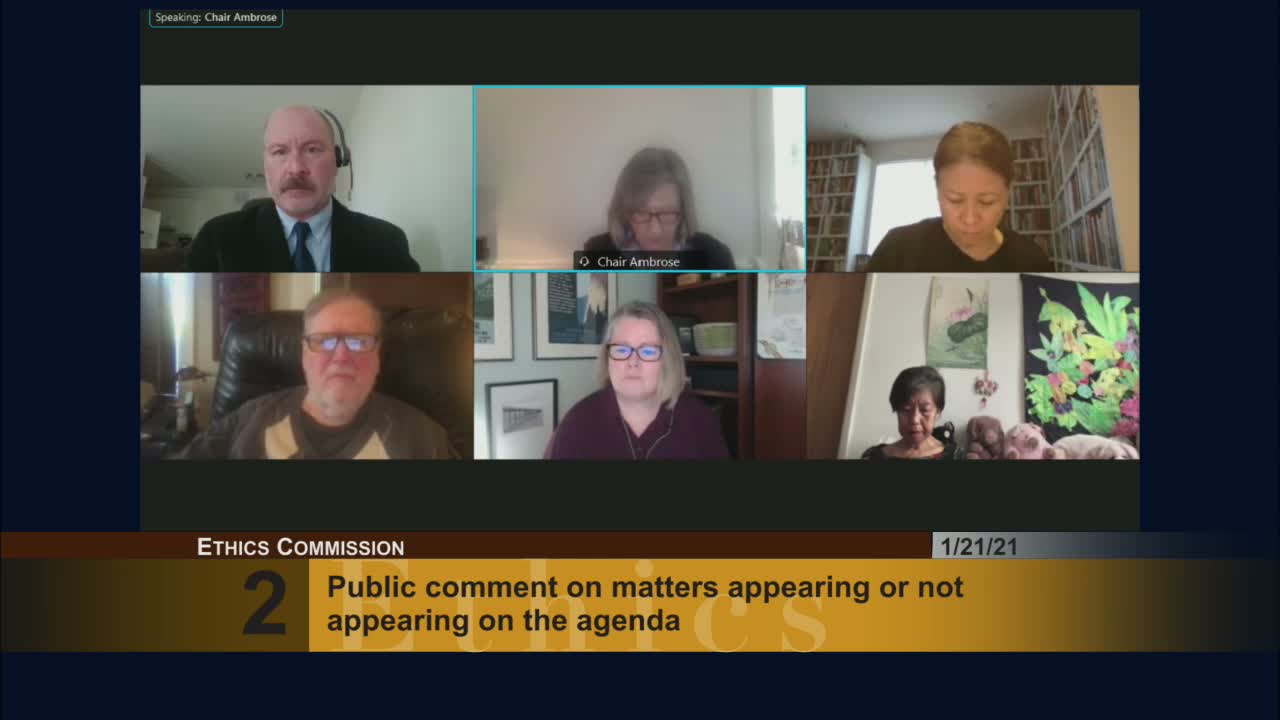
The San Francisco Ethics Commission held a remote public hearing on Feb. 1 to solicit input on its proposed fiscal‑year 2022 budget and how to meet mayoral instructions that would require roughly $733,000 in reductions to the commission’s operating budget.
Director Leanne Pelham told commissioners the mayor’s budget instructions show a citywide shortfall of about $653,000,000 and direct departments to identify mandatory reductions totaling roughly 10 percent, plus attrition savings. “The 7 and a half percent cut, the 2 and a half percent contingency… the total proposed cuts for the Ethics Commission… would be around $733,000,” Pelham said during the presentation.
Why it matters: Pelham said 85 percent of the commission’s operating budget is salary and fringe, so meeting the mayor’s targets will require staff reductions or hiring freezes that could slow audits, delay the planned Form 700 e‑filing rollout and limit on‑demand public assistance. “In every scenario that we looked at, there will have to be dollars — $733,000 — in cuts achieved,” Pelham said.
What the commission proposed: The staff recommended two priorities to protect the commission’s core functions. First, an “Ethics at Work” initiative to create a dedicated training unit with four training specialists and budget for software and materials to expand proactive outreach and onboarding. Second, Pelham recommended expanding the enforcement team by three investigators (in addition to four current investigators) and funding an online case‑management system to shorten investigative timelines and handle more complex cases.
Debate and trade‑offs: Commissioners pressed staff on how the cuts would be allocated and urged protection of investigations and the Form 700 rollout. Chair Terry Ambrose said the commission should avoid cuts that would impede the Form 700 electronic filing scheduled for July 1, 2022, arguing that public disclosure itself is a critical deterrent. Commissioner Chu framed the choice as both moral and practical: “When the going gets tough… it’s when what we value is put to the test,” she said, urging a combined approach of education and enforcement.
Skeptics and alternatives: Commissioner Busch questioned whether the training program alone would show demonstrated outcomes and urged prioritizing enforcement that produces visible results. Several commissioners and staff discussed seeking non‑general‑fund sources — including department work orders, bond oversight funds or fees on contractors — as potential revenue enhancements to blunt cuts. Pelham said those options were feasible but outside the scope of the presentation and pledged follow‑up with the Controller’s office.
Public comment and oversight concerns: A caller urged prioritizing investigations and faster enforcement, citing the Budget and Legislative Analyst’s audit that recommended improvements in the commission’s planning tools and noting that some investigations have taken years to resolve. Pelham acknowledged shared responsibility across city offices for some disclosure and incompatible‑activity enforcement but said the commission has enforced violations in the past and is refining systems to measure impact.
Administrative details and next steps: Commissioners asked for clarification on attrition savings (Pelham cited an attrition target roughly equal to 1.97 positions) and whether staff temporarily assigned as disaster‑service workers remain on the commission’s payroll (Pelham said they do). Pelham estimated office rent at roughly $100,000–$220,000 annually and said staff would pursue discussions with the mayor’s office about space and other revenue options. The commission agreed to return to the issue at its next public meeting in mid‑February, to finalize a submission to the mayor’s office and to consider a short public statement or op‑ed expressing the commission’s position and priorities.
Votes and procedural actions: No spending or policy votes were taken on the item. The meeting concluded with a routine motion to adjourn that carried on roll call (Commissioner Bush yes; Commissioner Chu yes; Vice Chair Lee excused; Chair Ambrose yes).
The commission’s staff will incorporate today’s feedback into a proposed budget document for the Feb. 12 public meeting and provide additional detail on revenue options, staffing scenarios and the Form 700 e‑filing timeline.