Get Full Government Meeting Transcripts, Videos, & Alerts Forever!
Get email alerts on the Sunshine Minutes topic
No spam. Unsubscribe anytime.
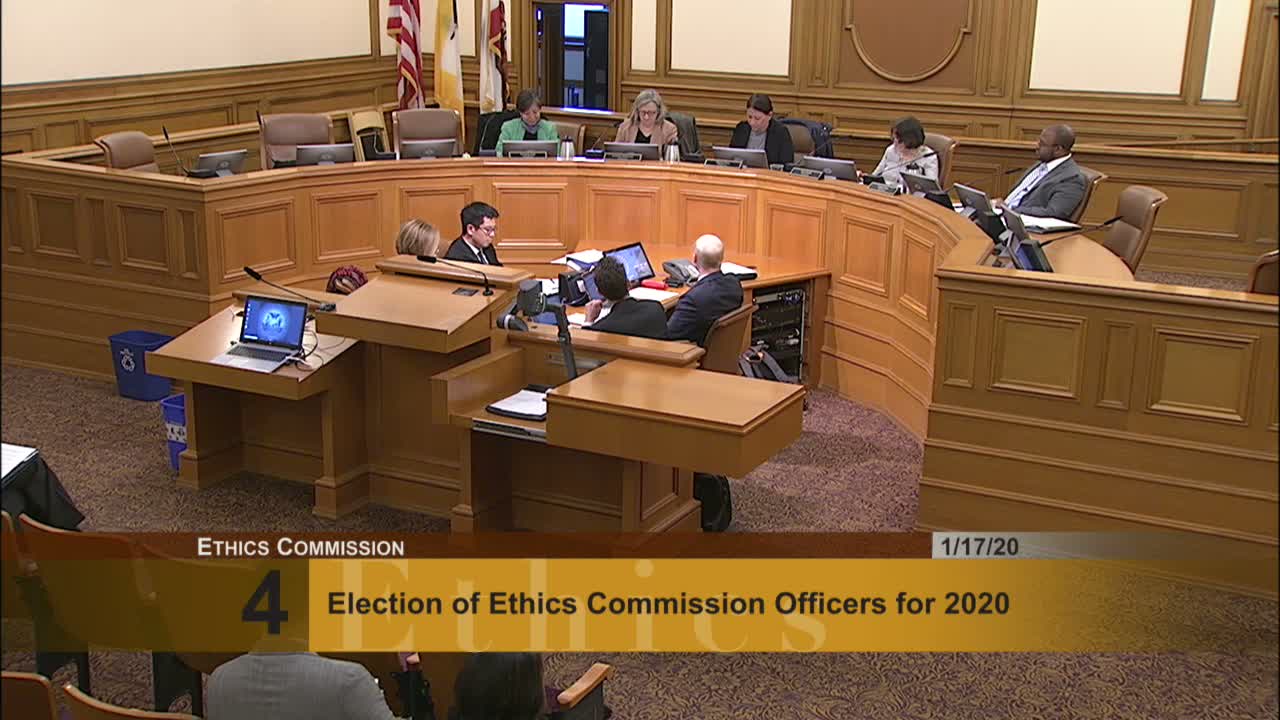
Ethics Commission finds Board president Norman Yee did not violate Sunshine Ordinance in show-cause hearing
Summary
After a contested show-cause hearing over placement of 150-word public-comment summaries, the San Francisco Ethics Commission voted unanimously that President Norman Yee did not violate Administrative Code sections 67.16 and 67.31 and that the code does not require those summaries to appear in the body of minutes.
The San Francisco Ethics Commission voted unanimously that Board of Supervisors President Norman Yee did not violate the city’s Sunshine Ordinance over the placement of 150-word public-comment summaries in Board minutes.
The finding came after a show-cause hearing on a referral from the Sunshine Ordinance Task Force. Complainant Ray Hartz argued that his 150-word summaries — a mechanism he uses to preserve the substance of his public comments — were relegated to an addendum rather than placed “in the body of the minutes,” which he said made them harder for the public to find and undermined free-speech protections. Hartz repeatedly told the commission he had other task force determinations supporting his view and said the practice diminished public access.
Angela Calvillo, clerk of the Board of Supervisors, told commissioners the clerk’s office places a summary and a page reference in the minutes and maintains the full text in a paginated addendum that is part of the permanent minutes. Calvillo and other Board representatives said the addendum is searchable and argued that the current practice preserves a concise minutes format while enabling public access via page references, agenda packets and the Board’s website.
Commission staff briefed the commission on the regulations that govern referrals from the Sunshine Ordinance Task Force and said the Ethics Commission may defer factual findings from the task force but may review legal conclusions de novo. Commissioners questioned both practical and legal implications, including whether the clerk’s pagination and references satisfied Administrative Code section 67.16’s requirement that a 150-word public-comment summary “be included in the minutes.”
After discussion the Chair moved and Commissioner Lee seconded a motion that President Yee did not violate Administrative Code sections 67.16 and 67.31 and that the commission’s legal interpretation is that the code does not require placement of public-comment summaries in the body of the minutes. The motion passed 5–0.
The commission’s decision resolves the administrative process on this referral; staff noted that a final administrative determination could be challenged by writ in Superior Court. Commissioners said they remained open to technical fixes or compromise language about how summaries are presented so that members of the public can more easily find comments tied to specific agenda items.