Get Full Government Meeting Transcripts, Videos, & Alerts Forever!
Get email alerts on the Public Financing topic
No spam. Unsubscribe anytime.
Ethics staff propose steep match for small donors and larger initial grants in public financing overhaul
Summary
Ethics Commission staff recommended lowering the matchable contribution to $100 and matching it at a 6-to-1 rate, increasing initial grants and raising spending ceilings for supervisorial and mayoral races; commissioners asked staff to model alternatives (including $150'$200 thresholds) and return with a draft ordinance and BLA analysis.
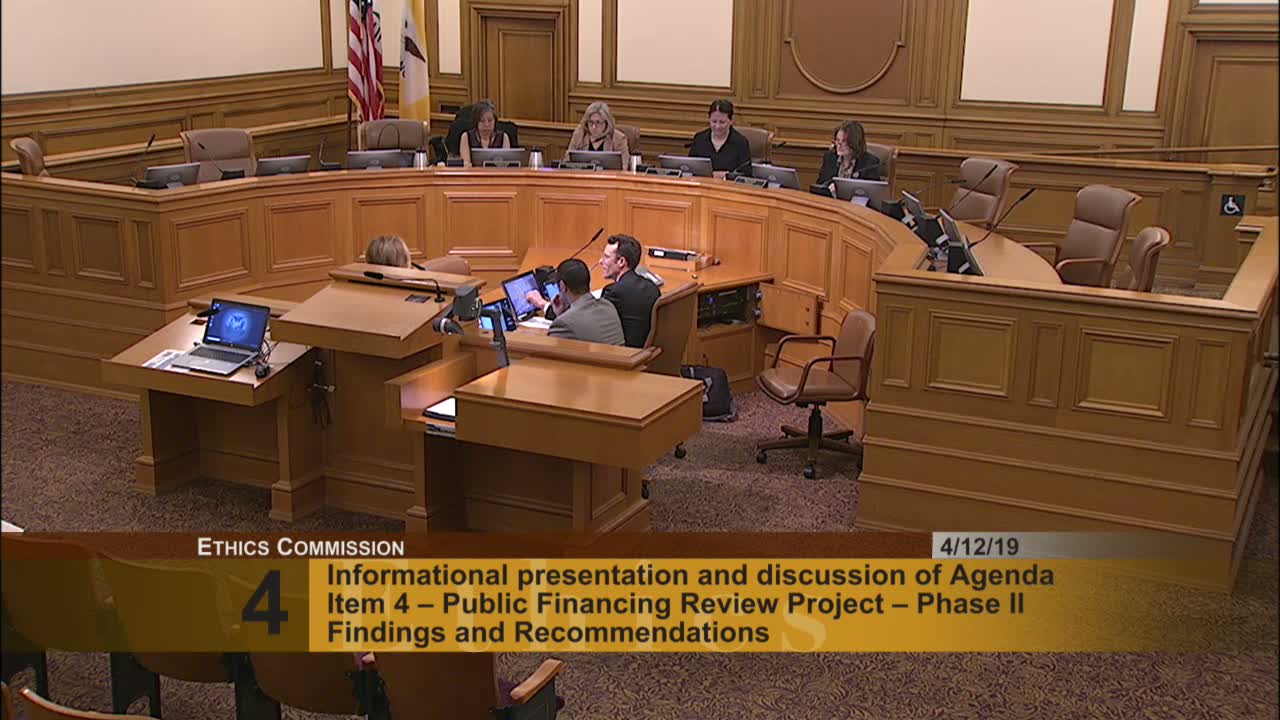
Pat Ford, senior policy staff for the San Francisco Ethics Commission, presented Phase 2 of a public financing review that would change how the city's clean-money program channels public funds to candidates. Ford said staff's recommendations are designed to "empower small contributions" and encourage candidate participation while reducing the time candidates spend fundraising.
"We are recommending in this report that public funding be available for the first $100 from any contributor," Ford said, and staff proposed matching that amount at a 6-to-1 ratio. The memo presented two alternatives for raising overall public funding caps for supervisorial and mayoral candidates; staff warned that the more generous option would increase pressure on the election campaign fund and might require additional appropriations.
Why it matters: staff said those changes would increase the relative value of small-dollar donors and, in some scenarios, give qualifying candidates earlier access to seed money. Ford said the proposals aim to make public financing "attractive to candidates" so more campaigns will opt in.
The recommendations included raising the initial expenditure ceiling and initial grant amounts so candidates can begin campaign work earlier. Ford said he favored keeping the timing of matching funds tied to existing limits but allowing the initial qualifying grant to be distributed earlier in the election cycle to help grassroots campaigns hire staff and organize.
Commissioners probed the fiscal impact and mechanics. Commissioner Ambrose asked how the ordinance would treat shortfalls; staff cited section 1.154 and said the commission can request additional funding from the Board of Supervisors but that allocation is discretionary. Officials also discussed options such as a clarified pro rata holdback if the fund's balance cannot cover every qualifying claim.
Public commenters and outside advocates endorsed the goal of lifting small donors but differed on the dollar threshold. John Golinger urged consideration of a higher matchable amount (around $200). A spokesperson who appeared for a Board member's office and other commenters recommended that any increase in initial-expenditure ceilings be matched by proportional increases in the total public funds available so the program does not dilute support for publicly financed campaigns.
Commission direction: commissioners asked staff to return next month with alternative simulations (including a $150 option and a $200 proposal requested by public commenters), the BLA's analysis of cost impacts, and a draft ordinance that coordinates staff recommendations with any draft legislation from the Board of Supervisors. No formal vote was taken on the Phase 2 recommendations at this meeting; the commission unanimously approved only routine draft minutes earlier in the agenda.
The commission expects to review an ordinance text and the BLA cost modeling at its next meeting.