Get Full Government Meeting Transcripts, Videos, & Alerts Forever!
Get email alerts on the Enforcement Staffing topic
No spam. Unsubscribe anytime.
Commission hears enforcement backlog and warns of staffing risk as whistleblower protections expand
Summary
Enforcement staff told the Ethics Commission the caseload is rising and investigations are bottlenecked by limited investigators; commissioners noted the whistleblower ordinance expansion is in effect and urged caution around proposed mayoral budget cuts that could reduce staffing.
Enforcement leaders told the San Francisco Ethics Commission on Jan. 14 that the office is managing an expanding workload with a small investigative team and that recent ordinance changes to the city's whistleblower protections will likely add complaints.
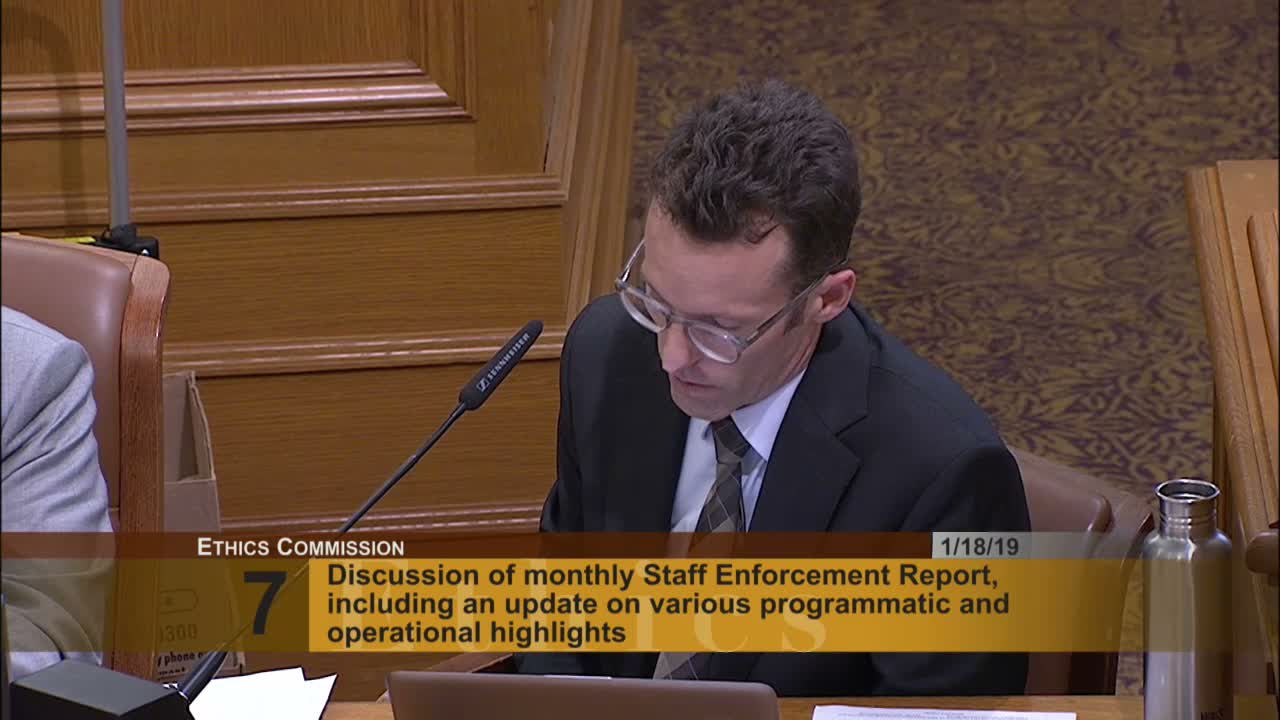
"We have 92 matters in preliminary review and 88 under investigation," said Mr. Pierce, the enforcement director, and he noted preliminary reviews average a little over six months because many matters sit idle awaiting staff time. Pierce said the enforcement unit currently includes three investigators plus a director and that a bottleneck exists when investigators produce reports that require supervisory review.
Commissioners asked for more detail on what drives review time and whether staff can speed throughput. Pierce said many complaints are disposed quickly when they fall outside jurisdiction, but some preliminary reviews require extra work when allegations are plausible. He warned that amendments expanding protected activity to city contractors and employees of contractors could increase the enforcement workload.
The commission also discussed the recently adopted whistleblower protection ordinance amendments, which staff said are already in effect and impose new training and publication obligations. "Those changes may increase the number of complaints that move into investigation rather than dismissal," Pierce said.
Separately, executive staff said the mayor's office asked departments to prepare budget reductions (roughly 2% in year one and 4% in year two) and contingency scenarios; staff said such cuts could translate to lost positions. "Cuts of this magnitude would materially impair the commission's ability to be effective," Commissioner Rennie said.
The commission asked staff to provide further budget detail at the February meeting and to continue work on hiring the remaining investigator position. Commissioners also directed staff to prepare a draft communication to federal lawmakers assessing whether public financing funds can be protected from bankruptcy discharge, as part of a broader discussion on recovering misused public funds.