Get Full Government Meeting Transcripts, Videos, & Alerts Forever!
Get email alerts on the Opinion Advice Regulations topic
No spam. Unsubscribe anytime.
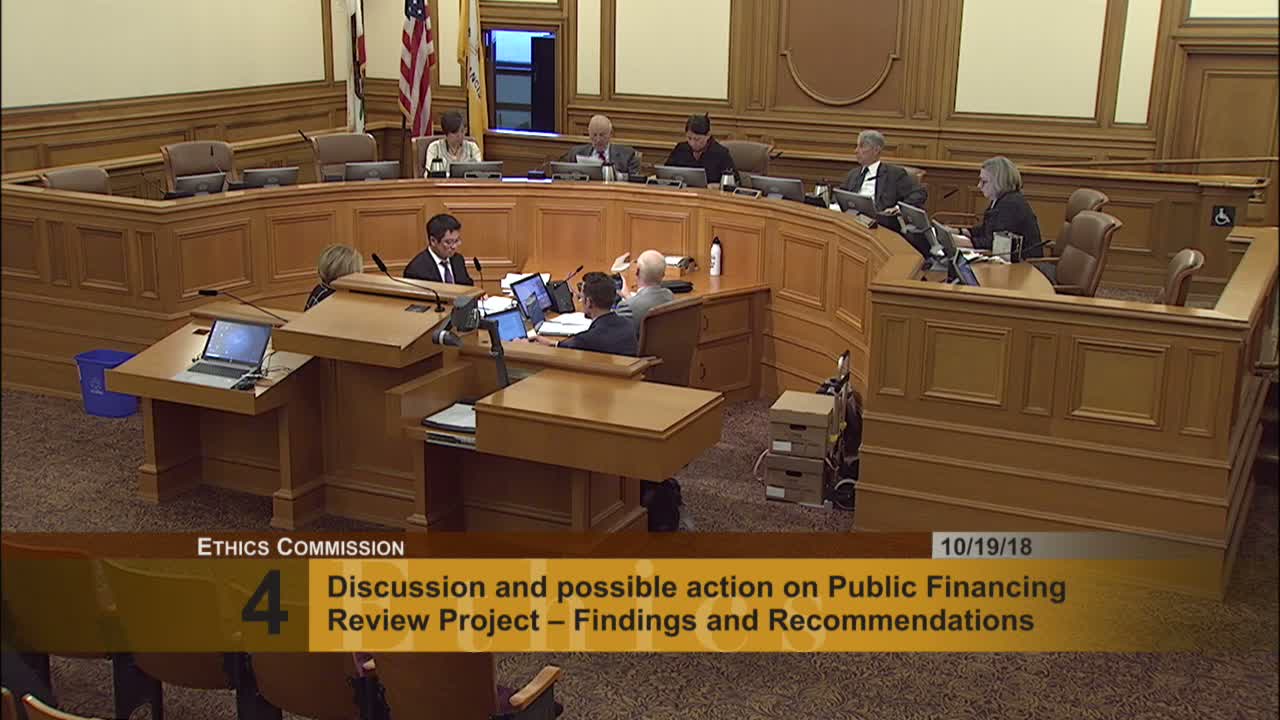
Ethics Commission adopts rules for opinions and staff informal advice after extensive debate
Summary
After extensive public comment and attorney input, the San Francisco Ethics Commission adopted new regulations defining the Commission's opinion process and staff informal advice, setting timelines, clarifying what counts as an informal request, and adding procedural safeguards for draft opinions and appeals.
The San Francisco Ethics Commission voted to adopt a package of regulations that define how the commission issues formal opinions and how staff provides informal advice to people asking about their duties under the city's political laws.
Pat Ford explained the draft rules would codify distinctions already in the charter between requests for a commission opinion and requests for staff informal advice, and would formally describe: what constitutes a complete request, the facts required to answer a question, timelines for staff and commission responses, how draft opinions are circulated to the City Attorney and District Attorney's offices, and the consequences of opinions for later enforcement actions.
A central debate focused on balancing accessibility with legal certainty. Attorney Anita Mayo (Pillsbury Winthrop) urged changes that would permit attorneys to seek informal assistance on hypotheticals without naming clients and recommended that conforming to written informal advice be a complete defense in enforcement. Ford and the Commission's staff said general inquiries and hypotheticals would continue to be answered as "general inquiries" but would not have the formal mitigating effect of identified, documented informal advice; they recommended limited mitigation rather than full immunity because informal contacts vary widely in formality.
Commissioners and public commenters also pressed staff on deadlines: multiple amendments adopted during the meeting set the executive director's initial completeness determination at 14 days after receipt and shortened the guaranteed staff turnaround for informal advice to 15 days after a complete request is filed (replacing earlier, longer timelines). The adopted draft also added language requiring staff to transmit draft opinions to the City Attorney and District Attorney's offices for review before the commission hears them.
Several public commenters, including Lou Anne Bassin, testified that the proposed formalization risked creating burdens for candidates who rely on quick front-office help. Ford responded that ordinary, simple inquiries would continue to receive prompt responses and that the regulations were intended mainly to standardize how requests that seek formal mitigation are handled.
The Commission adopted the regulations as amended by a recorded voice vote and directed staff to implement the new procedures and return with any necessary technical edits.
The adopted rules create a clearer process for when a requester will receive written informal advice and when staff will treat a contact as a general inquiry.