Get Full Government Meeting Transcripts, Videos, & Alerts Forever!
Get email alerts on the Enforcement Settlement topic
No spam. Unsubscribe anytime.
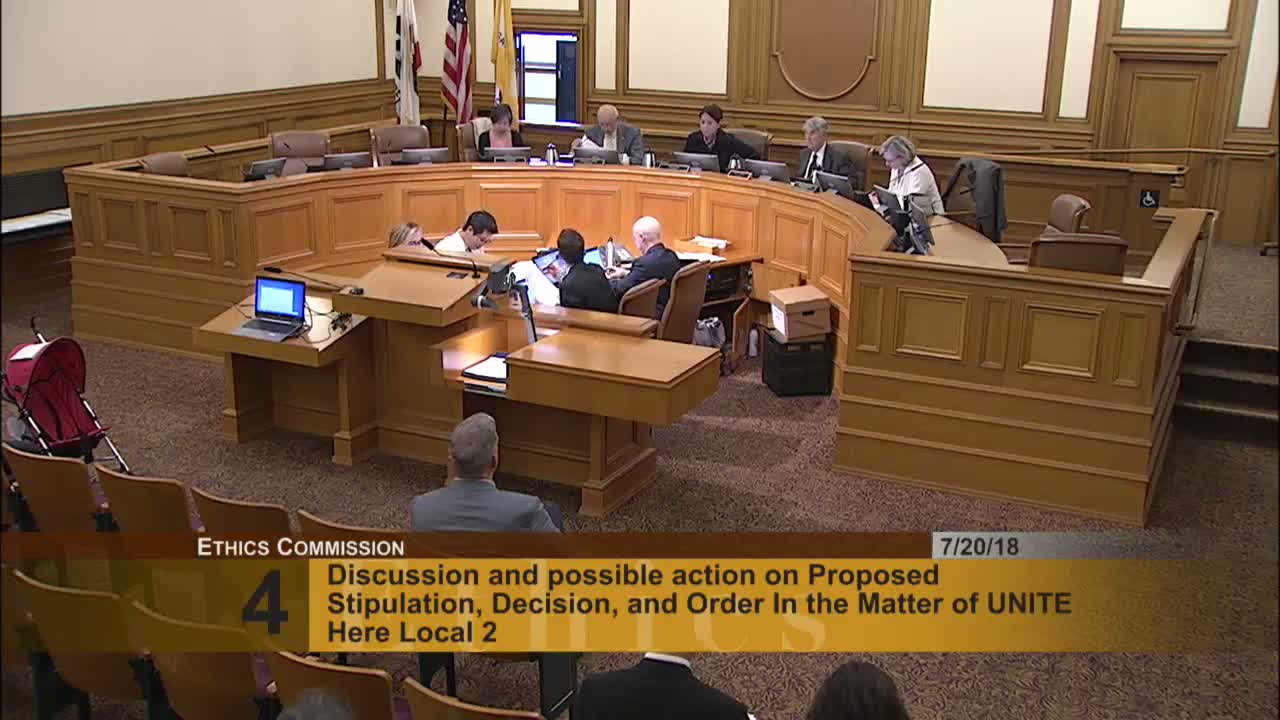
Ethics Commission approves negotiated stipulation with Unite Here Local 2 amid commissioner rebuke
Summary
The San Francisco Ethics Commission approved a staff-negotiated stipulation resolving two omitted 24-hour disclosure filings by a committee associated with Unite Here Local 2. Commissioners pressed staff over a history of late filings and one called the proposed fine a "slap on the wrist."
The San Francisco Ethics Commission on July 19 approved a staff-negotiated stipulation resolving two counts that a committee associated with Unite Here Local 2 omitted required 24-hour disclosure filings. The commission authorized the executive director to enter the stipulated settlement as negotiated with the respondent committee and approved the order by a 4–1 vote.
Staff enforcement counsel told commissioners the committee failed to timely file two disclosure reports that should have been made within 24 hours under the Political Reform Act; the omissions were detected in a commission audit. "Stipulations might appear on a consent calendar," staff said, and then explained the negotiated penalty was intended both to deter future violations and recognize mitigating factors, including cooperation and no evidence of willfulness.
Commissioners pressed staff on the committee's history. One commissioner cited a sequence of prior late-filing fees (including earlier penalties of $229.50, $75 and $425 in prior years) and argued the negotiated sanction under the stipulation was insufficient; he said he would "not vote to approve any stipulation which is less than $13,000" for the disclosed violations in recent years. Staff explained that the ordinance caps certain late-filing fees (for electronic filings the statute prescribes $25 per day up to specified limits) and that the enforcement regulation directs consideration of mitigation and comparability with past settlements.
Ian Lewis, assistant treasurer for the respondent committee, appeared and told the commission the omissions were mistakes, not intentional concealment. Lewis said he had attended training, retained counsel and changed filing practices in response to the prior problems.
After questions and public comment, a motion to accept the settlement as negotiated between staff and the respondent passed, with one commissioner dissenting on penalty adequacy. The commission recorded the motion as approved 4 to 1.
The commission—s action approves the stipulation as negotiated; staff said they will implement the settlement and monitor compliance. The commission—s materials indicate the counts arose from reports that were ultimately publicly available on other filing forms but were not posted within the 24-hour window required for immediate disclosures.
What happens next: staff will finalize the stipulated order and proceed as directed; the respondent agreed to the settlement terms at the hearing. The commission did not increase the negotiated penalty at the meeting.