Get Full Government Meeting Transcripts, Videos, & Alerts Forever!
Get email alerts on the Enforcement topic
No spam. Unsubscribe anytime.
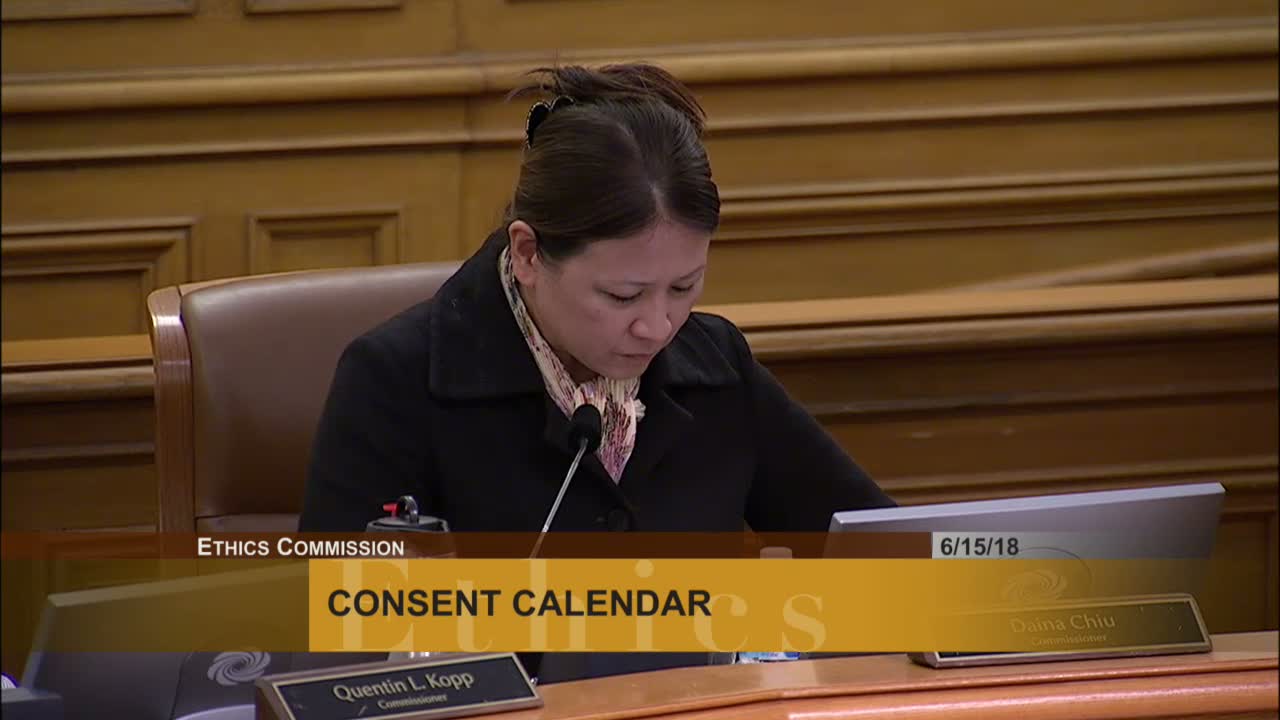
Ethics Commission approves stipulated settlement in Lisonbee matter; one commissioner dissents
Summary
The San Francisco Ethics Commission accepted a negotiated stipulation resolving allegations against a former housing official, approving a reduced penalty under a settlement despite one commissioner’s opposition.
The San Francisco Ethics Commission on a vote approved a stipulated settlement resolving allegations against a former official who served in the Mayor’s Office of Housing and Community Development. The agreement would resolve factual and legal allegations in the enforcement matter and finalize a monetary penalty as negotiated by staff and the respondent.
The executive director’s office told the commission the proposed stipulation was reached under the agency’s settlement authority and reflects a negotiated resolution both to the language of the stipulation and the proposed penalty amount. Staff described the agreement as fair and appropriate and said it would resolve the matter in its entirety if the Commission approved it.
Molly Stump, outside counsel retained to represent the respondent in his individual capacity, urged dismissal or, at minimum, no penalty, arguing the conduct occurred in the respondent’s official role and produced public benefit. Stump said the conduct involved official work to support affordable housing and that “there was no personal enrichment.” She also said the respondent, retired and wishing to put the matter behind him, was willing to resolve the case under the terms before the Commission.
Commissioners asked staff how negotiated penalty amounts were determined and whether the office follows written guidelines for reductions; staff answered that settlements reflect judgments about seriousness, statutory factors, and the interest of avoiding lengthy hearings. After discussion and public comment, Commissioner Rennie moved to accept staff’s recommendation to approve the stipulation; the motion was seconded and carried with three votes in favor and Commissioner Kopp opposed.
The Commission’s action was limited to approving the four-corners stipulation; staff noted that if the Commission had rejected the settlement, staff would have sought guidance about an alternative resolution or a different penalty. The stipulation will become final following formal sign-off per the Commission’s enforcement procedures.