Get Full Government Meeting Transcripts, Videos, & Alerts Forever!
Get email alerts on the Whistleblower Ordinance topic
No spam. Unsubscribe anytime.
Commission hears calls to pursue whistleblower protections and to consider ballot placement
Summary
Public commenters urged the Ethics Commission to reinstate broader whistleblower protections and place the whistleblower protection ordinance on the June ballot if the Board of Supervisors does not act; staff said the ordinance is in meet-and-confer with bargaining units and will return to the Board when complete.
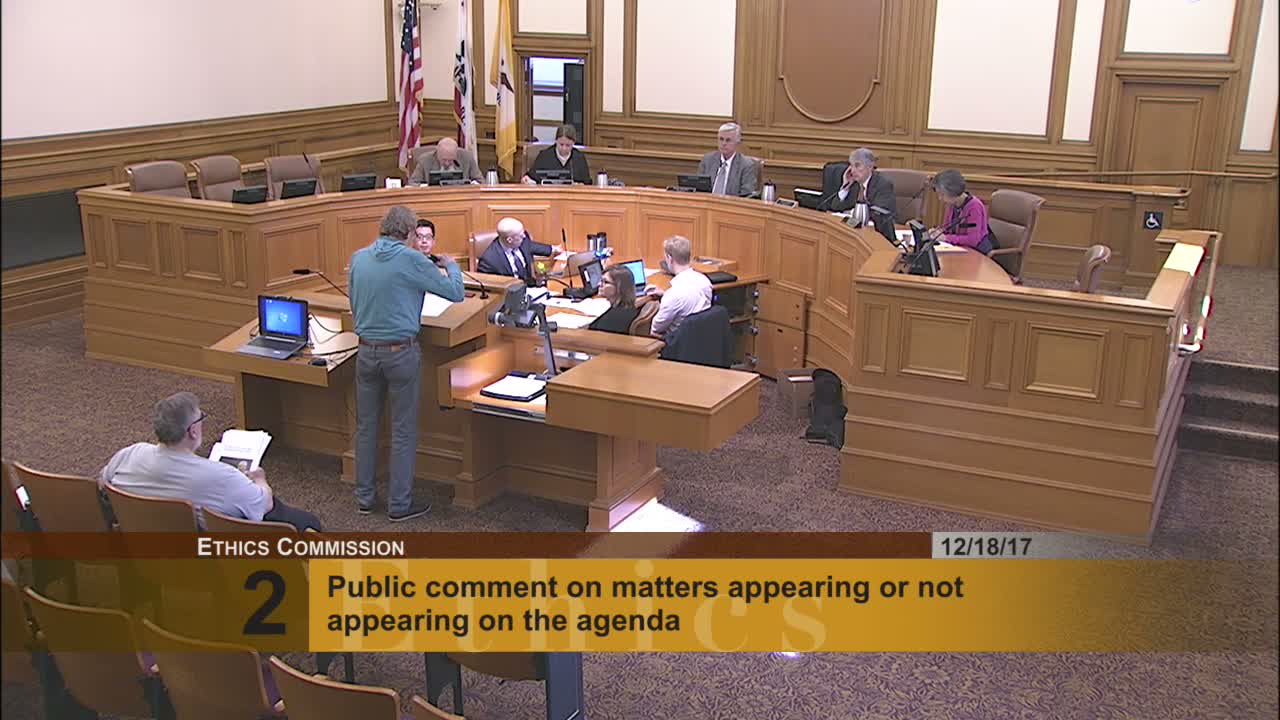
Members of the public urged the San Francisco Ethics Commission on Dec. 13 to advance broader whistleblower protections and to consider placing the Commission's proposed whistleblower protection ordinance on the June 2018 ballot if the Board of Supervisors fails to act.
Patrick Menon Shaw recalled voters passing Proposition C 14 years ago, cited a civil grand jury report and urged the Commission to put previously submitted WPO amendments directly on the June 2018 ballot before the February filing deadline. He asked the Commission to restore anti-retaliation protections that supervisors had removed and to ensure First Amendment protections are explicitly replicated in the whistleblower ordinance.
Staff reported the commission's proposed whistleblower ordinance has been transmitted to the Board and is now in a meet-and-confer process with bargaining units over provisions such as required training for supervisors who would handle intake and responses. Executive staff said they expect the meet-and-confer process to begin in early 2018 and will return to the Board after it concludes. Commissioners asked whether the Commission has authority to place the ordinance on the ballot directly if the Board does not act; staff said initial analysis suggests the Commission may have that authority for areas under its jurisdiction but pledged to provide formal written confirmation.
Commissioners discussed timeline tradeoffs for ballot placement; some urged that, if the Board weakens the ordinance in committee, the Commission should place the original version before voters. Staff noted a March deadline for ballot placement and the need to check meet-and-confer timing if the Commission seeks a June ballot.
Next steps: staff will report back on legal questions about meet-and-confer implications for placing Commission-initiated measures on the ballot and will keep the Commission updated on the meet-and-confer timeline and any need to pursue ballot placement.