Get Full Government Meeting Transcripts, Videos, & Alerts Forever!
Get email alerts on the Governance topic
No spam. Unsubscribe anytime.
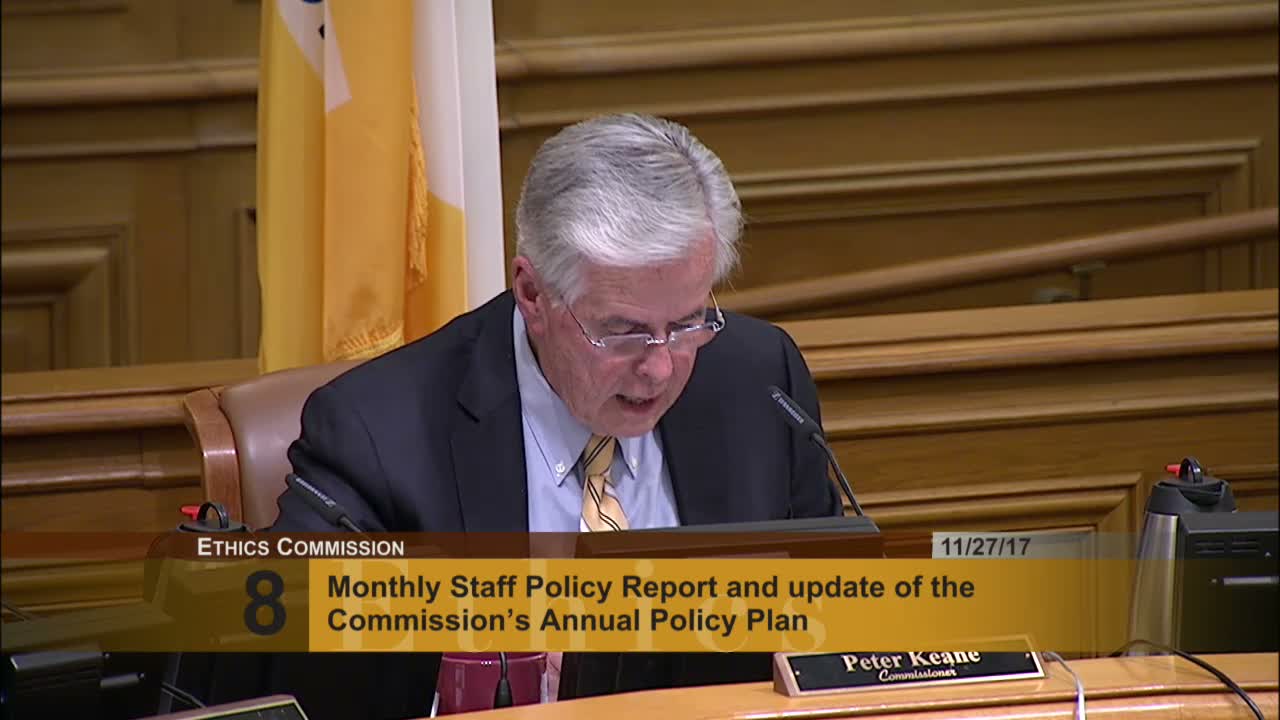
Ethics Commission to move regular meetings to weekday mornings, adds teleconference access
Summary
The commission voted to change its regular monthly meeting from fourth-Monday evenings to second-Tuesday mornings (10 a.m.), with an amendment requiring phone access for daytime attendees; supporters cited staff convenience and better weekday participation while opponents warned of excluding working residents.
The San Francisco Ethics Commission voted unanimously to change its regular meeting time from 5:30 p.m. on the fourth Monday to 10:00 a.m. on the second Tuesday of each month, with some first-quarter exceptions. The motion passed after commissioners and staff cited late adjournment issues, staff overtime and public-access constraints at late-night meetings.
Staff said room availability and the requirement that meetings be televised limited scheduling options; the proposed standing time would be second-Tuesday at 10:00 a.m. in the City Hall facilities that meet broadcast requirements. Commissioners said daytime meetings could reduce overtime and keep members more alert, and noted telephone bridge-line access could help public participation.
Public speakers were divided: some said evening meetings fostered greater participation from working residents and preferred the status quo; others suggested adding a bridge-line so working-day residents could call in. The commission adopted an amendment to make telephone capacity available so callers who cannot attend a daytime meeting can participate. The amendment likewise passed unanimously.
The commission agreed to coordinate with staff on implementation details and to monitor public participation, with the option to revisit the bylaw change if daytime attendance proved limiting.